


Deciding Between Window Units and Mini-Splits for Historic San Francisco Homes

The Dilemma of Cooling a Historic San Francisco Property
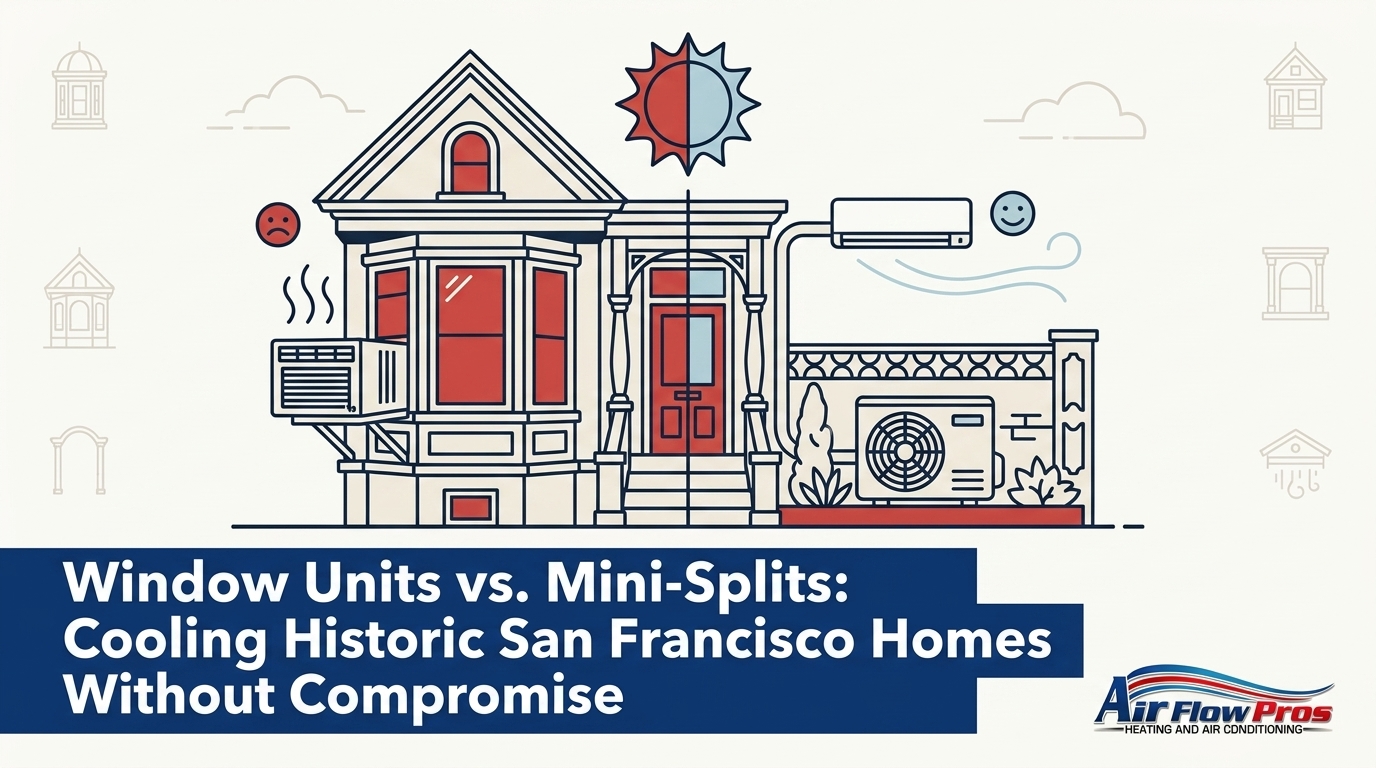
The biggest misconception about older Bay Area properties is that preserving a beautiful Victorian facade means you must suffer through intense July heat waves. Deciding between window units and mini-splits for historic San Francisco homes is a critical turning point for property owners who want modern comfort without destroying classic architecture. For decades, the famous coastal fog acted as a natural air conditioner, allowing homes built in the late 19th and early 20th centuries to be designed strictly for heat retention. Today, shifting climate patterns have made reliable cooling an absolute necessity rather than a luxury.
The structural challenge is obvious the moment you look above the ceiling: Victorians, Edwardians, and classic Marina-style homes simply do not have the existing ductwork required for traditional central air conditioning. Adding bulky metal ducts would require dropping ceilings, destroying original crown molding, and sacrificing the very architectural details that make these properties valuable. This leaves homeowners facing a stark choice between relying on temporary, noisy window fixtures or investing in permanent, low-profile technology. To bridge this gap, many property owners are discovering that upgrading to mini-split systems provides a pathway to reliable, whole-house comfort while leaving the home's historic charm completely untouched.
Navigating HOA Rules and Facade Preservation
Owning a property in historic San Francisco districts (e.g., Alamo Square, Pacific Heights) comes with a unique set of responsibilities. Municipal historic preservation guidelines heavily restrict visible, street-facing alterations to maintain the neighborhood's visual character. If you live in one of these highly regulated areas, popping a standard window AC unit into your front-facing bay window is often a direct violation of local codes.
Homeowners associations (HOAs) in these districts take facade preservation seriously. Many have strict bylaws that outright ban protruding window air conditioning units because they disrupt the uniform, historic streetscape. Even if a window unit is technically allowed in a rear-facing window, the aesthetic compromise is significant. Modern cooling solutions, however, can be customized to fit within highly restricted exterior footprints without violating aesthetic codes or triggering HOA fines.
The quick fix: Working with a team that understands local compliance makes all the difference. We frequently navigate strict San Francisco building codes and HOA regulations to ensure fully compliant installations. A typical pattern we see is a homeowner needing to upgrade a basement or lower-level space where the exterior compressor footprint is heavily restricted. Last fall, a local project required a completely customized solution for a tight exterior boundary. By carefully selecting low-profile equipment, the heating and cooling upgrade was completed successfully while easily meeting the strict spatial constraints of the property. If you want to avoid regulatory headaches, planning a professional AC installation in San Francisco ensures your new system respects both the law and the look of your home.
Why Lath and Plaster Walls Complicate Cooling Upgrades
If you have ever tried to hang a heavy picture frame in a pre-1940s home, you already know the frustration of dealing with lath and plaster walls. Unlike modern drywall, which is relatively easy to cut, patch, and paint, lath and plaster is a complex, fragile assembly. It consists of thin horizontal strips of wood (the lath) covered by multiple thick coats of wet plaster. Over decades, this material becomes incredibly brittle.
Attempting to retrofit traditional central air conditioning into a house with lath and plaster is a highly invasive process. Cutting large channels for return and supply ducts creates intense vibrations that often cause spiderweb cracks to spread across entire walls and ceilings. The process generates massive amounts of fine, hazardous dust and requires expensive, specialized plaster repair work to fix.
This architectural barrier is exactly why ductless mini-split systems vs. traditional window units represent such an important conversation. Ductless technology bypasses the need to tear open walls entirely. Instead of carving massive pathways for air, a permanent ductless system only requires a small, three-inch hole to connect the indoor air handler to the outdoor compressor. Avoiding the demolition of your walls preserves the home's structural and historical integrity. While optimizing HVAC ductwork performance is great for modern homes, the best strategy for a historic San Francisco property is usually avoiding ductwork altogether.
The Hidden Costs of Window Units: Security, Noise, and Air Quality
While window air conditioners offer a low upfront price tag, their hidden costs become apparent almost immediately, especially in older homes featuring classic double-hung wood windows. When you evaluate the long-term impact on your living environment, the drawbacks are substantial.
• Security vulnerabilities: To install a window unit, you must leave your ground-floor window unlocked and partially open. Even with makeshift brackets or blocks of wood in the track, this creates an easily exploitable entry point for intruders, compromising the safety of your home during summer travel.
• Noise disruption: Older wooden window frames are notorious for transferring vibration. Because a window AC houses the noisy compressor directly inside the unit, that heavy vibration transfers straight into the wood frame, creating a loud, continuous rattle that makes sleeping or watching television difficult.
• Poor indoor air quality: Window units rely on flimsy accordion-style side panels to fill the gap in your window track. These panels fail to seal out external air. During San Francisco's late summer and fall wildfire seasons, these gaps allow hazardous smoke particles and coastal moisture to drift directly into your living room.
• Damage to historic wood: The heavy, uneven weight of a window unit resting on an older wooden sill can warp the frame over time, leading to expensive carpentry repairs and permanent damage to original fixtures.
By relying on a temporary window box, you sacrifice the security, quiet, and clean air that you deserve in your own home.
How Ductless Technology Protects Architectural Integrity
Modern ductless technology is engineered specifically to provide high-capacity cooling with minimal intrusion, making it the ideal choice for historic preservation. The installation process respects the original craftsmanship of the home while delivering superior energy efficiency.
1. Minimal structural impact: The entire connection between the indoor unit and the outdoor compressor is routed through a single, easily sealed three-inch hole. This small conduit carries the refrigerant lines, power cable, and condensate drain, completely bypassing the need to destroy your historic lath and plaster.
2. Targeted comfort zones: Older homes often have segmented, closed-off floor plans rather than modern open concepts. Ductless systems allow you to create individual temperature zones for different rooms without tearing down walls or altering the original layout.
3. Sealed building envelope: Because the system does not require you to leave a window open, your home remains completely sealed. This maximizes energy efficiency and keeps coastal humidity and outdoor pollutants outside where they belong.
If you want to maintain the architectural beauty of your home while enjoying modern climate control, exploring duct-free cooling systems is the most effective strategy.
Electrical Panel Considerations for Older Homes
One critical factor homeowners often overlook is the state of their electrical panel. Historic properties frequently still operate on outdated 100-amp service panels. Plugging multiple window units into older circuits is a recipe for constantly tripped breakers and overloaded wiring. Modern, energy-efficient ductless systems utilize inverter technology, meaning they draw significantly less peak amperage upon startup than a collection of window units. This gentle power draw is much safer and more manageable for older electrical infrastructures.
Head-to-Head: Efficiency, Aesthetics, and Performance
When weighing your options for a historic property, it helps to see exactly how ductless mini-split systems vs. traditional window units stack up against each other across the categories that matter most to homeowners.
• Energy Efficiency — Traditional Window Units: Low. Significant air leaks around the window frame waste energy. — Ductless Mini-Split Systems: High. Sealed installation and inverter technology reduce energy waste.
• Aesthetic Impact — Traditional Window Units: High. Blocks natural light and creates an eyesore on the exterior facade. — Ductless Mini-Split Systems: Low. Sleek indoor units and hidden exterior condensers preserve the look.
• HOA Compliance — Traditional Window Units: Poor. Frequently banned in historic San Francisco districts. — Ductless Mini-Split Systems: Excellent. Customizable footprints meet strict neighborhood guidelines.
• Noise Levels — Traditional Window Units: Loud. Compressor sits in the window, vibrating against the wood frame. — Ductless Mini-Split Systems: Whisper-quiet. The noisy compressor is located entirely outside the home.
• Property Value — Traditional Window Units: None. Temporary fixtures do not add to the home's appraisal value. — Ductless Mini-Split Systems: High. Permanent, high-efficiency HVAC upgrades increase resale value.

Standing Up to Peak Summer Heat Events
San Francisco has experienced a noticeable increase in sudden, severe heat domes, making reliable cooling essential for July and August. Older homes present a unique challenge during these extreme temperature spikes due to their thermal mass. The heavy plaster walls and solid wood construction of a Victorian home act like a sponge for heat. Once the house gets hot during a prolonged heat wave, it stays hot long after the sun goes down, creating an incredibly uncomfortable sleeping environment.
To combat this, you need a responsive, high-capacity cooling system that can maintain a consistent temperature rather than struggling to catch up. A window unit simply lacks the power to cool down thick plaster walls once they have absorbed the afternoon heat. Ductless systems, on the other hand, run continuously at low power, preventing the thermal mass of the house from heating up in the first place.
When extreme weather stresses cooling equipment, having access to reliable, professional support is just as important as the hardware itself. During a recent summer heat wave, a local homeowner reached out because their heat pump system would not turn on during the hottest part of the day. A technician was dispatched for a same-day repair, quickly diagnosing the issue and restoring the system before the house could trap the afternoon heat. This level of responsiveness is why partnering with local San Francisco HVAC services is the safest way to protect your comfort during unpredictable summer weather.
Make the Right Cooling Choice for Your Historic Property
Preserving the architectural beauty of a historic home should never mean sacrificing your family's comfort during the hottest days of the year. Deciding between window units and mini-splits for historic San Francisco homes ultimately comes down to choosing between a temporary, inefficient fix and a permanent, property-enhancing solution. Before making a purchase, always evaluate your local HOA bylaws and municipal facade rules to ensure your choice is fully compliant.
By investing in modern ductless technology, you can bypass the nightmare of tearing into lath and plaster walls, secure your ground-floor windows, and enjoy whisper-quiet cooling that keeps wildfire smoke outside. If you are ready to upgrade your home's comfort without compromising its historic charm, schedule a professional site evaluation today to explore the most efficient, compliant options available for your unique property.
Frequently Asked Questions
Are mini-splits allowed in historic SF homes?
Yes, mini-splits are generally allowed and are often the preferred choice for historic properties. Because the exterior condenser can be placed discreetly in a side yard or rear footprint, they easily comply with municipal preservation guidelines. A professional installer can route the slim refrigerant lines to ensure no visible alterations are made to the street-facing facade.
How do you cool a Victorian house without ductwork?
The most effective way to cool a Victorian house without ductwork is by installing a ductless mini-split system. This technology uses a small outdoor compressor connected to individual indoor air handlers via a three-inch hole in the wall. It entirely bypasses the need to tear open ceilings or lath and plaster walls to install bulky metal ducts.
Do window units damage historic wood windows?
Yes, traditional window units can cause significant damage to historic wood windows over time. The heavy, uneven weight of the unit stresses the wooden sill and can warp the original frame. Additionally, the constant vibration from the compressor can loosen historic joinery and damage the surrounding paint and plaster.
Can you install ductless AC in an HOA community?
Yes, ductless AC systems are highly adaptable and can be installed in strict HOA communities. Because the outdoor equipment is compact and low-profile, it can usually be hidden behind fences, landscaping, or on rooftops to comply with aesthetic rules. Always submit your contractor's installation plan to the HOA architectural review board for approval before beginning work.
How do you route electrical lines in lath and plaster walls?
Professional installers route electrical and refrigerant lines through a single, small hole drilled carefully through the exterior wall. For interior routing, lines are often run through closets, basements, or covered by paintable line-hide conduits on the exterior. This method prevents the need to cut long, damaging channels into fragile lath and plaster.
Does permanent air conditioning increase the value of an older home?
Yes, adding a permanent, high-efficiency cooling system significantly increases the resale value of an older home. Buyers in the Bay Area increasingly view reliable air conditioning as a necessity due to hotter summers. A professionally installed mini-split system offers the dual benefit of modern climate control without the destruction of original architectural details.
Service Areas

