


Optimizing Airflow & Ductwork System Performance

The Hidden Lungs of Your Home: A Guide to Optimizing HVAC Ductwork Performance
You’ve invested in a high-quality heating and air conditioning system. You change your filters regularly. Yet, some rooms feel like a sauna while others are an icebox. Your energy bills keep creeping up, and there’s more dust than you remember. What’s going on?
You’re likely dealing with a problem that doesn’t live in your furnace or AC unit, but in the hidden network of pathways connecting them: your ductwork.
Think of your ductwork as the respiratory system of your home. If it’s leaky, restricted, or poorly designed, your entire HVAC system has to work harder to breathe, wasting energy and compromising your comfort. The truth is, this is far more common than most homeowners realize. According to the U.S. Department of Energy’s ENERGY STAR program, the typical duct system loses 20 to 30 percent of the air that moves through it to leaks, holes, and poor connections.
You’re paying to heat and cool air that never even reaches your rooms. This guide will help you understand why ductwork performance is critical, how to spot the warning signs, and what you can do to reclaim your comfort and efficiency.
Symptom Checker: Is Your Ductwork Quietly Costing You Money?
An underperforming duct system rarely announces itself with a loud bang. Instead, it creates a series of persistent, frustrating issues. See how many of these sound familiar:
• High Utility Bills: Your energy costs seem disproportionately high for your home’s size and your usage habits. Your system is running constantly just to keep up.
• Hot & Cold Spots: You have rooms that are difficult to heat in the winter or cool in the summer, no matter how you adjust the thermostat.
• Excessive Dust: You’re dusting more frequently than ever. Leaky return ducts can pull dusty, unfiltered air from attics, crawlspaces, or wall cavities directly into your system.
• Weak Airflow: When you hold your hand up to a vent, the airflow feels weak or inconsistent from room to room.
• Noisy Operation: You hear rattling, whistling, or booming sounds when your HVAC system kicks on. This can indicate improperly sized ducts or loose connections.
If you checked off two or more of these, it’s a strong signal that your ductwork needs attention.
The "Why" Behind the Whoosh: A Simple Guide to Airflow Physics
To understand why these symptoms occur, you don’t need an engineering degree. You just need to grasp one simple concept: balance.
Your HVAC system is designed as a closed loop. The fan pushes a specific volume of conditioned air (measured in Cubic Feet per Minute, or CFM) into your supply ducts. At the same time, it pulls a nearly equal amount of air back through your return ducts. This creates a balanced system with stable air pressure.
Leaks, sharp bends, and crushed or undersized ducts throw this entire system out of balance.
• Leaks Disrupt Pressure: Think of a garden hose with tiny pinpricks. You lose water pressure and volume before it ever reaches the nozzle. Duct leaks do the same, forcing your system to run longer to deliver the right amount of conditioned air.
• Poor Design Creates Resistance: Just as a crimped hose restricts water flow, sharp 90-degree bends or long, snaking flex duct runs create high static pressure—a measure of resistance. This forces the system’s fan to work overtime, increasing energy use and wear and tear.
Ultimately, these issues mean you’re paying for a 3-ton system but only getting 2 tons of performance. The rest is lost to inefficiency in the attic or crawlspace.
Your 30-Minute Ductwork Diagnostic: A DIY Inspection Guide
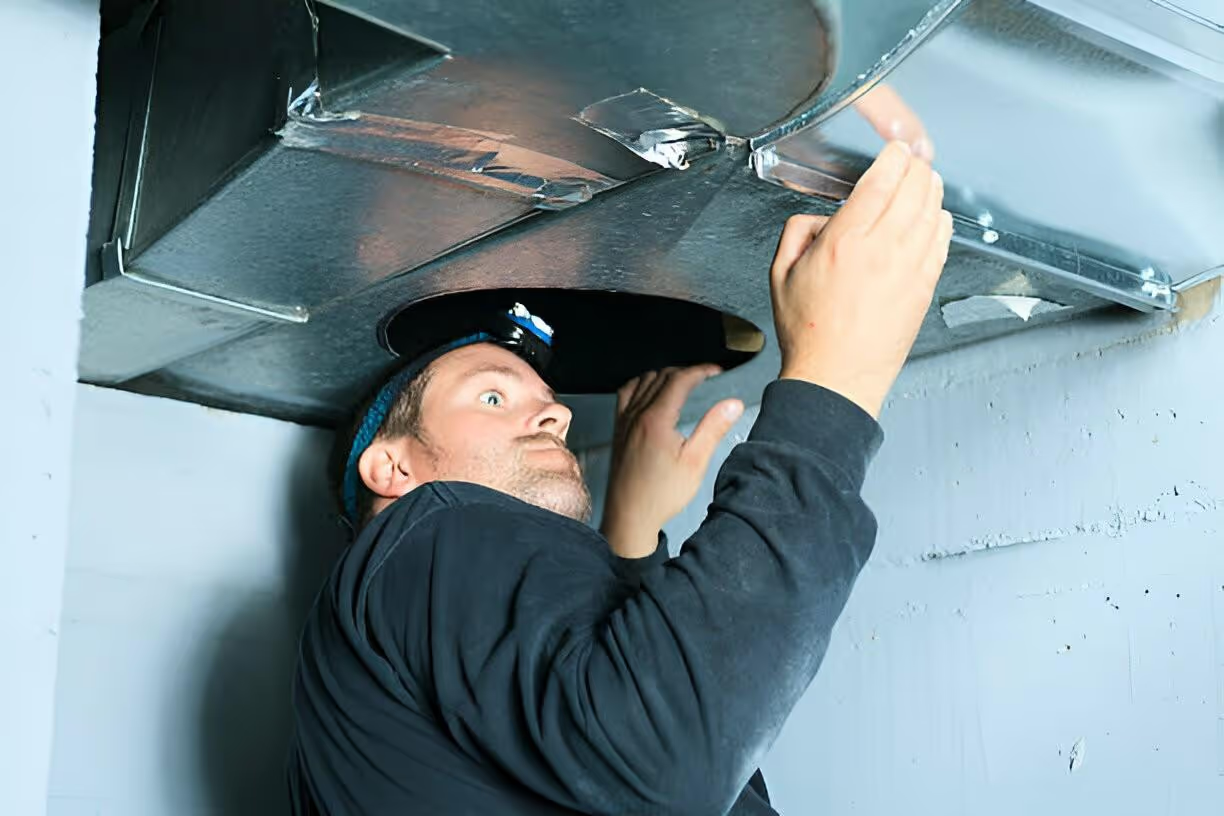
Before you can fix a problem, you need to find it. You can perform a safe, preliminary visual inspection to get a sense of your ductwork’s condition. Grab a flashlight and look for these common culprits:
1. Check Connections: Look at every point where ducts connect—to the main unit and where sections join. Do you see gaps, disconnected sections, or torn, failing tape?
2. Look for Kinks: Examine flexible duct lines. They should be pulled taut and straight. Sharp bends or crushed sections are major airflow killers.
3. Feel for Air Leaks: With your system running, carefully run your hand along the seams and joints of accessible ductwork. You may be able to feel escaping air.
A simple diagnostic you can perform inside is the "dollar bill test." See if your return grilles have enough suction to hold a dollar bill against them. If the bill falls right off, it’s a sign of poor return airflow, which could be caused by leaks or a blockage somewhere in the system.
The Big Fixes: A Prioritized Guide to Restoring Performance
Optimizing your ductwork isn’t just about patching one or two holes; it’s about restoring the integrity of the entire system. Here are the key areas professionals focus on.
1. Sealing the Gaps: Mastic vs. Tape
You might see metallic-looking foil tape on duct joints, but this is often the wrong tool for the job. Standard duct tape breaks down quickly from temperature changes and humidity. The professional standard is duct mastic, a gooey, paint-on sealant that creates a durable, flexible, and permanent seal over joints and seams.
2. The Power of Insulation
If your ducts run through unconditioned spaces like an attic or crawlspace, insulation is non-negotiable. Uninsulated ducts can lose a significant amount of heat in the winter or gain heat in the summer, forcing your system to re-condition the air. This single step can dramatically improve efficiency.
3. Duct Design Done Right
Sometimes, the problem is the layout itself. Systems with excessive lengths of flexible duct, too many sharp turns, or undersized ducts will never perform efficiently. A professional can assess whether a partial redesign, like replacing a convoluted flex run with a smooth, rigid metal duct, could solve chronic airflow problems. Learn more about our custom HVAC installation services to see how proper design makes a difference.
4. Balancing the System for Room-to-Room Comfort
Properly sealed and designed ducts are the first step. The final tune-up is system balancing. This involves adjusting small levers called dampers inside the ducts to precisely regulate how much air goes to each room, finally eliminating those stubborn hot and cold spots.
DIY Fix vs. Calling a Professional: A Clear Decision Framework
Knowing when to tackle a job yourself and when to call for expert help is crucial. Using the wrong materials or failing to identify the root cause can make problems worse.
Good DIY Projects:
• Visually inspecting your ductwork for obvious issues.
• Sealing small, easily accessible leaks on metal ducts with mastic.
• Ensuring your registers and grilles are open and unobstructed.
When to Call Air Flow Pros:
• You suspect major leaks in inaccessible areas (attics, crawlspaces, behind walls).
• Your system requires airflow testing and balancing with specialized tools.
• You have persistent hot/cold spots that simple fixes haven’t solved.
• You need to address poor duct design or undersized sections.
• You see signs of moisture or mold growth around your ducts or vents.
Our team has the diagnostic tools to measure airflow and pressure, pinpoint hidden leaks, and provide solutions that are right for your home. Proper sealing and balancing isn’t just a repair; it’s a long-term investment in your home's performance.
The Payoff: What’s the Real Return on Efficient Ductwork?
Addressing ductwork issues isn't an expense; it's a direct investment in lowering your energy bills. With potential efficiency gains of 20 percent or more, the savings add up quickly.
Consider a simplified example:
• Average Monthly Energy Bill: $350
• Potential Savings (20%): $70 per month
• Annual Savings: $840
Over the lifespan of your HVAC system, optimizing your ductwork can save you thousands of dollars, not to mention the immediate improvement in comfort and indoor air quality.
Frequently Asked Questions About Ductwork Performance
Q: How often should I get my ducts cleaned?
A: Duct cleaning can be beneficial, especially if you have pets, allergies, or have recently completed a renovation. However, duct sealing is more critical for efficiency. Cleaning a leaky system is like washing a car with holes in the floor it doesn’t fix the underlying problem. Always prioritize sealing over cleaning.
Q: Can leaky ducts affect my health?
A: Yes. Leaky return ducts can pull in dust, insulation fibers, pollen, and other contaminants from your attic or crawlspace and distribute them throughout your home. This can be a major trigger for allergy and asthma sufferers. Discover our indoor air quality solutions that work with your system.
Q: What's the difference between duct sealing and duct replacement?
A: Sealing involves closing up leaks and gaps in your existing, structurally sound ductwork. Replacement is necessary when ducts are severely damaged, collapsed, improperly sized, or contaminated with mold. A professional assessment can determine the right course of action.
Q: My house is new, so my ductwork must be fine, right?
A: Unfortunately, this is a common misconception. Even in new construction, ductwork can be installed hastily with poor connections, unsealed joints, and restrictive kinks. An inspection is always a good idea if you’re experiencing performance issues.
From Wasted Energy to Peak Comfort: Your Next Step
• Your HVAC system is one of the biggest energy consumers in your home. Letting up to 30% of that investment leak away into your attic is a problem you can’t afford to ignore.
• By understanding the critical role of your ductwork, you’re already on the path to a more comfortable, efficient, and healthy home. The next step is taking action.
If you’re tired of battling inconsistent temperatures and high energy bills, let’s talk. The Air Flow Pros team can provide an honest, thorough assessment of your ductwork and create a customized plan to restore your system’s performance.
The Hidden Lungs of Your Home: A Guide to Optimizing HVAC Ductwork Performance
You’ve invested in a high-quality heating and air conditioning system. You change your filters regularly. Yet, some rooms feel like a sauna while others are an icebox. Your energy bills keep creeping up, and there’s more dust than you remember. What’s going on?
You’re likely dealing with a problem that doesn’t live in your furnace or AC unit, but in the hidden network of pathways connecting them: your ductwork.
Think of your ductwork as the respiratory system of your home. If it’s leaky, restricted, or poorly designed, your entire HVAC system has to work harder to breathe, wasting energy and compromising your comfort. The truth is, this is far more common than most homeowners realize. According to the U.S. Department of Energy’s ENERGY STAR program, the typical duct system loses 20 to 30 percent of the air that moves through it to leaks, holes, and poor connections.
You’re paying to heat and cool air that never even reaches your rooms. This guide will help you understand why ductwork performance is critical, how to spot the warning signs, and what you can do to reclaim your comfort and efficiency.
Symptom Checker: Is Your Ductwork Quietly Costing You Money?
An underperforming duct system rarely announces itself with a loud bang. Instead, it creates a series of persistent, frustrating issues. See how many of these sound familiar:
- High Utility Bills: Your energy costs seem disproportionately high for your home’s size and your usage habits. Your system is running constantly just to keep up.
- Hot & Cold Spots: You have rooms that are difficult to heat in the winter or cool in the summer, no matter how you adjust the thermostat.
- Excessive Dust: You’re dusting more frequently than ever. Leaky return ducts can pull dusty, unfiltered air from attics, crawlspaces, or wall cavities directly into your system.
- Weak Airflow: When you hold your hand up to a vent, the airflow feels weak or inconsistent from room to room.
- Noisy Operation: You hear rattling, whistling, or booming sounds when your HVAC system kicks on. This can indicate improperly sized ducts or loose connections.
If you checked off two or more of these, it’s a strong signal that your ductwork needs attention.
The "Why" Behind the Whoosh: A Simple Guide to Airflow Physics
To understand why these symptoms occur, you don’t need an engineering degree. You just need to grasp one simple concept: balance.
Your HVAC system is designed as a closed loop. The fan pushes a specific volume of conditioned air (measured in Cubic Feet per Minute, or CFM) into your supply ducts. At the same time, it pulls a nearly equal amount of air back through your return ducts. This creates a balanced system with stable air pressure.
Leaks, sharp bends, and crushed or undersized ducts throw this entire system out of balance.
- Leaks Disrupt Pressure: Think of a garden hose with tiny pinpricks. You lose water pressure and volume before it ever reaches the nozzle. Duct leaks do the same, forcing your system to run longer to deliver the right amount of conditioned air.
- Poor Design Creates Resistance: Just as a crimped hose restricts water flow, sharp 90-degree bends or long, snaking flex duct runs create high static pressure—a measure of resistance. This forces the system’s fan to work overtime, increasing energy use and wear and tear.
Ultimately, these issues mean you’re paying for a 3-ton system but only getting 2 tons of performance. The rest is lost to inefficiency in the attic or crawlspace.
Your 30-Minute Ductwork Diagnostic: A DIY Inspection Guide
Before you can fix a problem, you need to find it. You can perform a safe, preliminary visual inspection to get a sense of your ductwork’s condition. Grab a flashlight and look for these common culprits:
- Check Connections: Look at every point where ducts connect—to the main unit and where sections join. Do you see gaps, disconnected sections, or torn, failing tape?
- Look for Kinks: Examine flexible duct lines. They should be pulled taut and straight. Sharp bends or crushed sections are major airflow killers.
- Feel for Air Leaks: With your system running, carefully run your hand along the seams and joints of accessible ductwork. You may be able to feel escaping air.
A simple diagnostic you can perform inside is the "dollar bill test." See if your return grilles have enough suction to hold a dollar bill against them. If the bill falls right off, it’s a sign of poor return airflow, which could be caused by leaks or a blockage somewhere in the system.
The Big Fixes: A Prioritized Guide to Restoring Performance
Optimizing your ductwork isn’t just about patching one or two holes; it’s about restoring the integrity of the entire system. Here are the key areas professionals focus on.
1. Sealing the Gaps: Mastic vs. Tape
You might see metallic-looking foil tape on duct joints, but this is often the wrong tool for the job. Standard duct tape breaks down quickly from temperature changes and humidity. The professional standard is duct mastic, a gooey, paint-on sealant that creates a durable, flexible, and permanent seal over joints and seams.
2. The Power of Insulation
If your ducts run through unconditioned spaces like an attic or crawlspace, insulation is non-negotiable. Uninsulated ducts can lose a significant amount of heat in the winter or gain heat in the summer, forcing your system to re-condition the air. This single step can dramatically improve efficiency.
3. Duct Design Done Right
Sometimes, the problem is the layout itself. Systems with excessive lengths of flexible duct, too many sharp turns, or undersized ducts will never perform efficiently. A professional can assess whether a partial redesign, like replacing a convoluted flex run with a smooth, rigid metal duct, could solve chronic airflow problems. Learn more about our custom HVAC installation services to see how proper design makes a difference.
4. Balancing the System for Room-to-Room Comfort
Properly sealed and designed ducts are the first step. The final tune-up is system balancing. This involves adjusting small levers called dampers inside the ducts to precisely regulate how much air goes to each room, finally eliminating those stubborn hot and cold spots.
DIY Fix vs. Calling a Professional: A Clear Decision Framework
Knowing when to tackle a job yourself and when to call for expert help is crucial. Using the wrong materials or failing to identify the root cause can make problems worse.
Good DIY Projects:
- Visually inspecting your ductwork for obvious issues.
- Sealing small, easily accessible leaks on metal ducts with mastic.
- Ensuring your registers and grilles are open and unobstructed.
When to Call Air Flow Pros:
- You suspect major leaks in inaccessible areas (attics, crawlspaces, behind walls).
- Your system requires airflow testing and balancing with specialized tools.
- You have persistent hot/cold spots that simple fixes haven’t solved.
- You need to address poor duct design or undersized sections.
- You see signs of moisture or mold growth around your ducts or vents.
Our team has the diagnostic tools to measure airflow and pressure, pinpoint hidden leaks, and provide solutions that are right for your home. Proper sealing and balancing isn’t just a repair; it’s a long-term investment in your home's performance.
The Payoff: What’s the Real Return on Efficient Ductwork?
Addressing ductwork issues isn't an expense; it's a direct investment in lowering your energy bills. With potential efficiency gains of 20 percent or more, the savings add up quickly.
Consider a simplified example:
- Average Monthly Energy Bill: $350
- Potential Savings (20%): $70 per month
- Annual Savings: $840
Over the lifespan of your HVAC system, optimizing your ductwork can save you thousands of dollars, not to mention the immediate improvement in comfort and indoor air quality.
Frequently Asked Questions About Ductwork Performance
Q: How often should I get my ducts cleaned?
A: Duct cleaning can be beneficial, especially if you have pets, allergies, or have recently completed a renovation. However, duct sealing is more critical for efficiency. Cleaning a leaky system is like washing a car with holes in the floor it doesn’t fix the underlying problem. Always prioritize sealing over cleaning.
Q: Can leaky ducts affect my health?
A: Yes. Leaky return ducts can pull in dust, insulation fibers, pollen, and other contaminants from your attic or crawlspace and distribute them throughout your home. This can be a major trigger for allergy and asthma sufferers. Discover our indoor air quality solutions that work with your system.
Q: What's the difference between duct sealing and duct replacement?
A: Sealing involves closing up leaks and gaps in your existing, structurally sound ductwork. Replacement is necessary when ducts are severely damaged, collapsed, improperly sized, or contaminated with mold. A professional assessment can determine the right course of action.
Q: My house is new, so my ductwork must be fine, right?
A: Unfortunately, this is a common misconception. Even in new construction, ductwork can be installed hastily with poor connections, unsealed joints, and restrictive kinks. An inspection is always a good idea if you’re experiencing performance issues.
From Wasted Energy to Peak Comfort: Your Next Step
- Your HVAC system is one of the biggest energy consumers in your home. Letting up to 30% of that investment leak away into your attic is a problem you can’t afford to ignore.
- By understanding the critical role of your ductwork, you’re already on the path to a more comfortable, efficient, and healthy home. The next step is taking action.
If you’re tired of battling inconsistent temperatures and high energy bills, let’s talk. The Air Flow Pros team can provide an honest, thorough assessment of your ductwork and create a customized plan to restore your system’s performance.
Service Areas

