


AC Repair Near Me: Troubleshooting Musty Smells and Fall HVAC Startup Issues

Preparing Your HVAC System for the October Transition
October brings a noticeable chill to the Bay Area air, signaling that the warmer days are officially behind us. As temperatures drop, you rely on local service expertise and area tips to prepare your home for the colder months ahead. Before the first real cold snap hits, you will likely switch your thermostat to heating mode for the first time since early spring. That initial October pre-winter heating startup often comes with an unwelcome surprise: a damp, musty smell blowing out of your vents, or a system that struggles to push out warm air.
If you need immediate help evaluating your system's performance, explore our air conditioning services to ensure your equipment transitions safely into the heating season.
The Shift from Cooling to Heating
During the transition from late-summer heat to chilly autumn nights, your HVAC system undergoes a significant operational shift. For months, your heat pump or furnace has either been running strictly in cooling mode or sitting completely dormant. When a mechanical system sits idle, it becomes vulnerable to environmental factors. Dust settles on internal components, moisture accumulates in dark spaces, and electrical connections can experience subtle changes due to temperature fluctuations.
Turning on a system that has sat dormant often reveals underlying issues that require professional attention. Homeowners face a critical decision during this first fall startup: ignore the initial musty smell and uneven heating as a temporary seasonal quirk, or take proactive steps to protect their indoor air quality and system health. Understanding how your system reacts to the local climate, and knowing when to seek professional help, ensures a safe and comfortable transition into the winter months.
Why Your System Smells Musty During Fall Startup
The San Francisco Bay Area is famous for its unique weather patterns, and these environmental factors directly impact your home's mechanical systems. HVAC units often sit dormant during the cooler, foggy marine layer months of late summer. When you finally switch the thermostat to heating mode, the sudden blast of air can carry trapped odors directly into your living spaces.
The Impact of San Francisco Microclimates
In coastal neighborhoods—particularly San Francisco microclimates like the fog-heavy Sunset or Richmond districts—the heavy marine layer and high relative humidity dramatically increase moisture accumulation. Outdoor heat pumps and ductwork running through unconditioned crawlspaces are constantly exposed to this damp, salty air. Over the summer months, condensation forms on the dark, cool surfaces of your indoor evaporator coils.
This trapped moisture creates an ideal breeding ground for biological growth. In the HVAC industry, this phenomenon is commonly known as "dirty sock syndrome" because the resulting odor smells exactly like a locker room or a pile of damp laundry. When you activate the heating cycle, the system warms up these damp coils and blows the accumulated biological particulate matter straight into your home. If you want to improve how your system moves air and handles moisture, optimizing your HVAC ductwork performance is a great place to start.
Distinguishing Between Normal and Abnormal Odors
It is crucial to distinguish between a normal seasonal odor and a persistent problem that requires intervention. Not every smell indicates a failing system, but knowing the difference can save you from circulating hazardous air.
• Burning Dust / Hair — Typical Cause: Normal dust accumulation burning off the heat exchanger or coils. — Duration: 10 to 30 minutes during the first heating cycle. — Required Action: Monitor. Open windows to ventilate. No repair needed if it fades quickly.
• Musty / Damp / Mildew — Typical Cause: Biological growth on coils (Dirty Sock Syndrome) due to marine layer moisture. — Duration: Persistent. Returns every time the system runs. — Required Action: Professional coil cleaning and system inspection required.
• Electrical / Plastic Melting — Typical Cause: Failing electrical components, overheating blower motor, or wiring issues. — Duration: Persistent and intensifying. — Required Action: Shut system down immediately and call a licensed professional.
Searching for 'AC Repair Near Me': What to Check First
When your system fails to produce warm air or emits a terrible smell during the October pre-winter heating startup, your first instinct might be to search for repair services. However, there are several safe, homeowner-level troubleshooting steps you can perform before making that call. If you find yourself stuck, professional help for troubleshooting air conditioner issues and heating failures is always available.
One local homeowner reached out to our team when their heater went out on Christmas Eve morning during a sudden cold snap. A technician arrived promptly, investigated the dormant system, and resolved the issue quickly so they could enjoy their holiday. Catching minor performance issues during your initial fall startup helps prevent these exact mid-winter emergencies.
Safe Homeowner Troubleshooting Steps
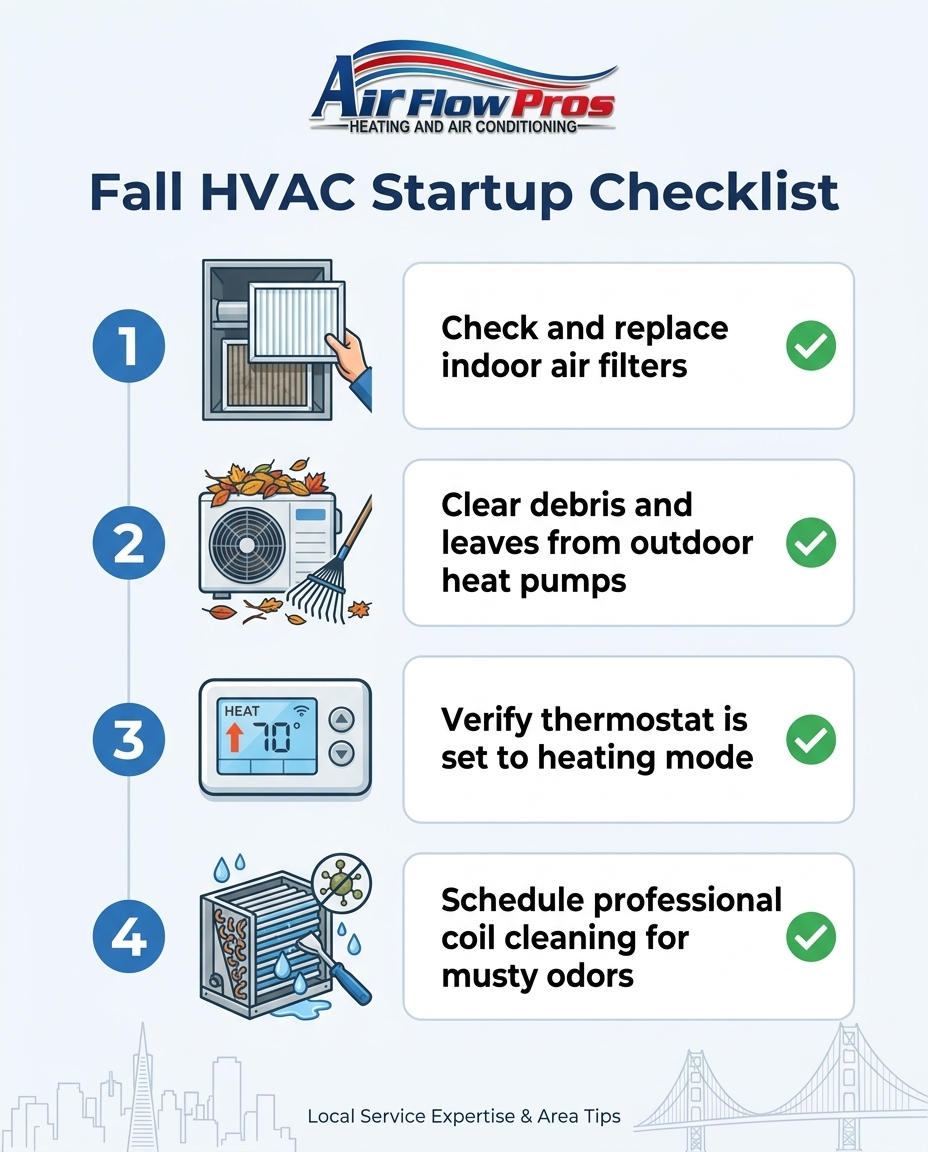
1. Verify your thermostat settings: This sounds simple, but it is the most common cause of early-season service calls. Ensure the thermostat is explicitly set to "Heat" and not "Auto" or "Cool." If you have a digital thermostat that relies on batteries, replace them with fresh ones. Weak batteries can cause the thermostat to lose its connection to the main control board, resulting in short-cycling or a complete failure to start.
2. Inspect and replace the indoor air filter: A clogged filter is the enemy of HVAC efficiency. Over the summer, your filter may have captured pet dander, dust, and pollen. A dirty filter severely restricts airflow, forcing the blower motor to work harder and increasing the strain on the entire system. Replace the filter with a fresh, properly sized MERV-rated filter before running the heat.
3. Examine the outdoor unit: If you have a heat pump, walk outside and inspect the exterior condenser. Autumn winds often blow fallen leaves, twigs, and debris into the grill. Ensure there is a clear two-foot perimeter around the entire unit so it can pull in the air it needs to operate efficiently.
4. Check your circuit breakers: Sometimes, a power surge or a tripped breaker over the summer will leave the heating system without power. Check your main electrical panel to ensure the breaker labeled for your HVAC system is fully in the "On" position.
5. Know your DIY limits: While changing a filter and clearing leaves are perfectly safe, you must recognize when to stop. Never attempt electrical repairs, open sealed access panels, or handle refrigerant lines. These components require specialized tools and a licensed professional to service safely.
The Danger of Ignoring Uneven Heating and Odors
It is tempting to ignore a slight musty smell or a room that does not get quite as warm as the rest of the house. However, operating a compromised system carries significant risks to both your home's indoor air quality and the mechanical longevity of the equipment itself.
Risks to Indoor Air Quality
Ignoring musty odors can lead to poor indoor air quality, circulating airborne particulates throughout the home. For families living in San Francisco microclimates like the fog-heavy Sunset or Richmond districts, the constant influx of damp air means biological growth can spread rapidly if left unchecked. Breathing in these particulates daily can irritate respiratory conditions, trigger allergies, and create a generally uncomfortable living environment. Your HVAC system should filter and clean your air, not contaminate it.
Mechanical Strain and Sudden Breakdowns
Beyond the air you breathe, running a dirty or struggling system causes severe mechanical strain. When evaporator coils are coated in grime and biological growth, they cannot transfer heat effectively. This forces the compressor to work harder and run longer to achieve the temperature set on your thermostat. Increased friction and extended run times lead to premature wear and tear on expensive internal components.
Minor issues left unaddressed during the fall transition frequently escalate into sudden breakdown emergencies during cold spells. Addressing the root cause early prevents more extensive and invasive repairs later in the season. We prioritize accurate troubleshooting to identify the true root cause of damp odors and uneven heating, preventing repeat breakdowns rather than just offering a quick, temporary fix.
Minor problems left unchecked often force a much larger replacement down the road. Recently, a homeowner needed to upgrade their entire system after years of accumulating wear. Our team crafted a customized solution for their limited space, completing a complex AC installation in San Francisco alongside a new furnace and basement mini splits. While we are always ready to handle major upgrades, proactive fall care helps you get the maximum lifespan out of your current equipment before replacement becomes necessary.
Why a Pre-Winter Inspection is the Smartest Move
The most effective way to handle an October pre-winter heating startup is to have a professional evaluate the system before you actually need to rely on it. A comprehensive pre-winter inspection goes far beyond simply changing the air filter. It is a deep dive into the mechanical, electrical, and airflow components of your equipment.
What Happens During a Professional Tune-Up?
When a licensed technician arrives for a maintenance visit, they perform a rigorous series of checks designed to reset your system after its summer dormancy. By enrolling in a routine HVAC maintenance plan, you ensure these critical steps are never missed:
• Deep cleaning the coils: Technicians use specialized, safe chemical cleaners to remove the biological growth causing "dirty sock syndrome," restoring heat transfer efficiency and eliminating musty odors.
• Clearing condensate lines: Summer cooling produces gallons of water. Algae and sludge can build up in the condensate drain line. Clearing this line prevents water from backing up and flooding your utility closet or crawlspace.
• Tightening electrical connections: The vibration of a running system can slowly loosen electrical terminals over time. Technicians check voltage and tighten connections to prevent short circuits and electrical fires.
• Testing safety controls: Furnaces and heat pumps have built-in safety switches designed to shut the system down if it overheats or detects a problem. Technicians verify these limit switches are fully operational.
• Calibrating the thermostat: Ensuring the thermostat accurately reads the room temperature prevents the system from short-cycling and wasting energy.
Technicians can spot hidden wear and tear from the summer cooling season before it impacts your heating performance. Proactive maintenance protects your indoor air quality and ensures the system operates safely and efficiently. Furthermore, regular inspections keep manufacturer warranties intact—as most brands require proof of annual maintenance—and significantly extend the overall lifespan of the HVAC equipment.
Frequently Asked Questions About Local HVAC Repair and Maintenance
Why does my heater smell musty when I turn it on?
Musty smells are typically caused by moisture and biological growth on the indoor evaporator coils. This phenomenon is common after the system has been dormant during humid or foggy months, allowing condensation to pool in dark areas. When the heating cycle kicks on, the blower forces air over these damp coils, pushing the locker-room-like odor into your living spaces. Professional coil cleaning is usually required to eliminate the odor at its source and restore fresh airflow.
Is a musty smell from the vents dangerous?
While a brief dust burn-off smell lasting a few minutes is normal, persistent musty odors can indicate the presence of mold or mildew inside your ductwork or air handler. Circulating these biological pollutants can degrade your indoor air quality and irritate asthma, allergies, and other respiratory conditions. It should be inspected by a professional to ensure the home's air remains safe and healthy for your family to breathe.
How do I find a trustworthy HVAC repair service?
Look for local contractors who understand regional climate challenges and the specific microclimates of your area. Prioritize companies that focus on root-cause troubleshooting rather than just offering quick, temporary fixes that lead to repeat breakdowns. Always check for proper state licensing, strong local reviews demonstrating a track record of reliability, and transparent communication regarding what your system actually needs.
How often should my HVAC system be serviced?
Industry standards and equipment manufacturers recommend professional servicing twice a year to maintain peak efficiency. You should schedule a comprehensive tune-up in the spring to prepare for cooling season, and another in the fall to prepare for the heating season. Regular, proactive maintenance is the absolute best defense against unexpected breakdowns, high utility bills, and premature equipment failure.
How does humidity affect my home heating system?
High humidity and coastal fog can lead to excess moisture accumulation in outdoor units, crawlspaces, and exposed ductwork. This excess moisture forces the system to work harder to condition the air, as it must expend energy removing dampness before it can effectively heat the space. Proper maintenance, clean coils, and sealed ductwork ensure the system can handle environmental moisture without compromising its heating performance.
Secure Your Comfort Before the Cold Settles In
Navigating an October pre-winter heating startup doesn't have to be a stressful experience. Don't let a musty smell or a minor performance issue turn into a mid-winter emergency when you need warmth the most. Taking action now ensures that your equipment is clean, calibrated, and ready to handle whatever the changing seasons bring.
A clean, professionally inspected system guarantees better indoor air quality, reliable warmth, and the peace of mind that your home is safe. Reach out to a local expert today to schedule your pre-winter inspection and secure your comfort for the months ahead.
Service Areas

