


Resolving Musty AC Smells Caused by San Francisco's Late-Summer Marine Layer

The Sudden Arrival of "Dirty Sock Syndrome" in Coastal Homes
As back-to-school season kicks into gear, your air conditioner is running hard on a warm afternoon, but instead of crisp, cool relief, the vents are blasting a pungent, mildew-like odor into your living room. Resolving Musty AC Smells Caused by San Francisco's Late-Summer Marine Layer is a common challenge our technicians at Air Flow Pros see when August heat collides with returning coastal fog. This jarring experience is not just a nuisance; it is a documented indoor air quality phenomenon known in the HVAC industry as "dirty sock syndrome."
If you are tired of breathing in compromised air, exploring professional indoor air quality solutions is the most effective way to address the root cause of these sudden odors before they spread through your entire home.
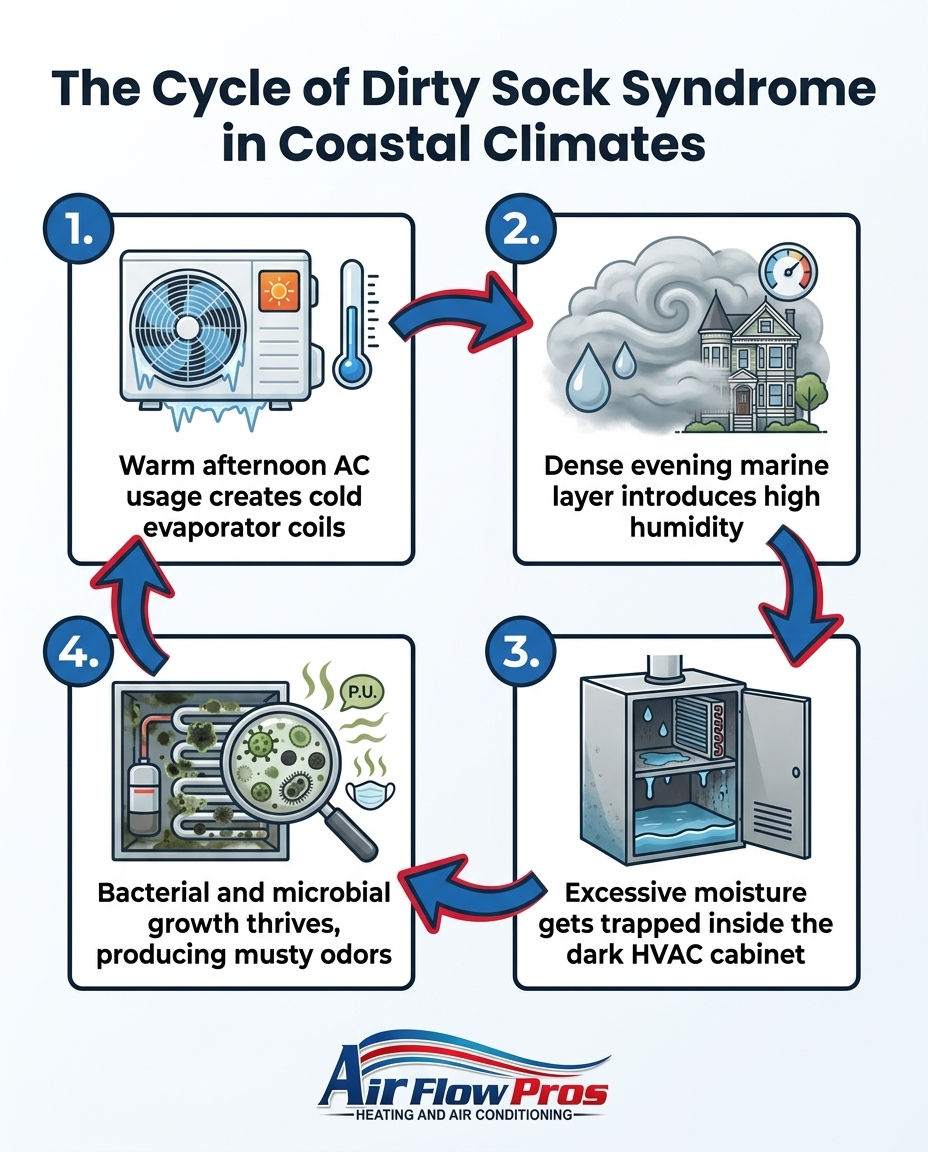
Dirty sock syndrome typically strikes with little warning. One day your system pushes out clean, cold air, and the next, it smells like a high school locker room. This sudden onset aligns perfectly with the transition into late-summer cooling. During this time, your cooling system is working its hardest to combat daytime heat. When the late-summer August marine layer rolls in, the sudden shift in outdoor moisture levels creates a perfect storm inside your ductwork.
The underlying mechanics:
• Temperature swings: Warm afternoon operation creates rapid cooling demands.
• Moisture introduction: Evening fog introduces heavy, damp air into the home's envelope.
• Biological response: Bacteria and mold spores seize the opportunity to multiply in the newly dampened environment.
Homeowners often assume a dead animal or a sudden plumbing leak is to blame for the stench. However, the true culprit is microscopic. The biological pollutants thriving inside your cooling system are actively off-gassing, and your blower motor is distributing those gases into every room. Understanding why this happens requires looking at the unique weather patterns just outside your windows.
How Local Weather Patterns Hijack Your Cooling System
Standard residential cooling equipment is designed to handle predictable, gradual shifts in temperature and humidity. However, as our team knows from years of servicing homes across the Bay Area, local weather is anything but predictable. During August in San Francisco, warm, sunny afternoons quickly give way to dense, damp fog. This rapid transition drastically increases the relative humidity outdoors in a matter of hours, creating a unique stress test for your HVAC system.
As your air conditioner runs, it pulls warm air from inside your home, passes it over cold coils to remove heat, and pushes the cooled air back into your living spaces. Part of this cooling process involves dehumidification. When the dense fog arrives, the air inside your home absorbs that external moisture. Your AC is suddenly forced to pull in highly saturated air while simultaneously trying to cool the house down.
For homeowners looking to ensure their systems can handle this heavy moisture load, scheduling comprehensive air conditioning services provides a critical baseline for equipment performance.
Because San Francisco coastal microclimates experience these rapid shifts daily, standard equipment often becomes overwhelmed. Inland cooling systems might run all day in dry heat, allowing internal components to manage moisture efficiently. In contrast, coastal systems pull in damp air right as the evening temperatures drop. The system satisfies the thermostat's temperature setting quickly because the ambient air is cooling down, but it shuts off before it has a chance to run a proper dehumidification cycle. This short-cycling leaves heavy moisture trapped inside the unit, setting the stage for indoor air quality issues.
The Hidden Breeding Ground Inside Your Vents
To understand why dirty sock syndrome occurs, you have to look at the physics of air conditioning. Cooling naturally produces moisture. As warm air passes over the chilled evaporator coil, water vapor condenses into liquid. Under normal operating conditions, this water drips into a drain pan and flows safely out of your home through a condensate line.
The problem arises when excessive condensation on cold evaporator coils fails to drain or dry out. Because the coastal air remains constantly damp, the natural drying process that usually occurs between cooling cycles is halted. The interior of your HVAC cabinet becomes a dark, highly saturated environment—the exact conditions required for biological pollutants to thrive.
The lifecycle of biological growth in your AC:
1. Spore introduction: Microscopic mold and bacteria spores, which are naturally present in all indoor air, are pulled into the return vents.
2. Attachment: These spores bypass standard fiberglass filters and attach themselves to the wet, sticky surface of the evaporator coil.
3. Proliferation: Fed by the constant moisture from the fog and the darkness of the cabinet, the microbes multiply rapidly into a biofilm.
4. Off-gassing: As the biological mass grows, it releases volatile organic compounds (VOCs) that smell exactly like dirty, damp socks.
Why Standard Maintenance Falls Short
Typical HVAC advice found online often assumes a generalized, inland climate. We constantly remind our San Francisco customers that generic maintenance guides suggesting coils will dry out on their own simply do not apply here. They assume that simply changing a filter and hosing off the outdoor condenser is enough to keep a system running perfectly.
Coastal humidity requires a much more proactive approach to moisture management. Because the air surrounding the home rarely dries out completely during the late summer, the internal components of the AC remain perpetually slick with condensation. Standard maintenance protocols do not account for this continuous moisture, meaning the biological growth is never fully disrupted. Without targeted intervention, the biofilm continues to thicken, restricting airflow, reducing system efficiency, and intensifying the musty odors blowing into your home.
Diagnosing the Source: Filter Fatigue or Deep System Contamination?
When a musty smell suddenly takes over your home, our technicians find that the first decision point is determining whether you are dealing with a simple maintenance task or a complex system contamination. Many homeowners immediately assume they just need a new air filter. While a clogged filter can certainly contribute to poor air quality, it is rarely the sole cause of dirty sock syndrome.
Standard air filters are designed to capture large particulate matter—dust, pet dander, and hair. When a filter reaches its capacity, it restricts airflow, forcing the system to work harder. Signs of filter fatigue include:
• A general dusty smell when the system kicks on.
• Visibly gray or black filter media.
• Weak airflow coming from the supply registers.
• Longer cooling cycles to achieve the desired temperature.
However, if the odor is distinctly sour, mildew-like, or resembles sweaty gym clothes, the problem is bypassing the filter entirely. Standard 1-inch fiberglass filters do absolutely nothing to neutralize biological pollutants. Even high-efficiency pleated filters cannot stop mold spores from growing once they take root on a damp coil.
If you are interested in ensuring your entire ventilation system is working efficiently alongside your filtration, optimizing HVAC ductwork performance can help improve airflow and reduce the strain on your equipment.
To help you navigate this decision, here is a breakdown of the symptoms we typically see:
• Odor Profile — Filter Fatigue: Dry, dusty, or slightly stale — Deep System Contamination: Pungent, sour, mildew, or "dirty socks"
• Timing of Odor — Filter Fatigue: Briefly upon startup, then fades — Deep System Contamination: Persistent throughout the cooling cycle
• Airflow Impact — Filter Fatigue: Noticeably weak from all vents — Deep System Contamination: Airflow may seem normal, but smells bad
• Trigger Event — Filter Fatigue: Months without a filter change — Deep System Contamination: Heavy use during the late-summer August marine layer
If your symptoms align with deep system contamination, swapping out the filter will not solve the problem. The microbial growth is firmly attached to the internal components, requiring professional remediation to safely remove.
Professional Interventions for Persistent Musty Odors
Addressing dirty sock syndrome is not a weekend DIY project. The evaporator coil is located deep inside the air handler or furnace cabinet, often sealed behind sheet metal panels. Attempting to clean these delicate aluminum fins with household cleaners or stiff brushes can easily bend the fins, permanently restricting airflow and ruining the coil. Furthermore, standard household bleach does not effectively kill mold on porous or complex metallic surfaces; it merely bleaches the visible layer while leaving the roots intact.
Resolving this issue requires a specialized process. A licensed technician must carefully access the interior components, isolate the electrical systems, and apply EPA-approved foaming treatments designed specifically for HVAC biological pollutants. These specialized biocides expand deep into the coil fins, breaking down the microbial biofilm without corroding the sensitive metal.
As dedicated San Francisco HVAC experts, our team at Air Flow Pros intimately understands how local microclimates impact equipment differently. This deep regional knowledge allows us to apply targeted, locally proven remedies rather than relying on generic, temporary fixes that fail as soon as the fog returns.
Beyond cleaning the excessive condensation on cold evaporator coils, our professional intervention includes a thorough evaluation of the drainage system. We inspect the condensate drain pan for cracks, rust, or standing water, and flush the primary and secondary condensate lines to clear out any algae or sludge blockages. If the moisture cannot exit the home properly, the dark, damp environment will immediately return, and the dirty sock smell will follow shortly after.
Neutralizing the Threat with Advanced IAQ Defenses
While a professional deep clean will eliminate the existing microbial growth and stop the immediate odors, it does not change the weather outside. As long as the San Francisco coastal microclimates continue to pump dense fog and high humidity into your home's envelope, the risk of recurrence remains high. To permanently neutralize the threat, you need an active defense mechanism installed directly inside the HVAC system.
In our experience, the definitive regional solution we recommend for preventing dirty sock syndrome is the installation of ultraviolet germicidal irradiation (UVGI) technology. Specifically, specialized UV lights are mounted inside the air handler, positioned to shine directly onto the evaporator coil and the condensate drain pan.
How UV-C technology protects your air:
• DNA disruption: The specific wavelength of UV-C light penetrates the cellular walls of mold spores and bacteria, destroying their DNA and preventing them from reproducing.
• Continuous operation: Unlike a chemical spray that washes away, the light operates continuously, keeping the coil clean 24/7.
• Passive protection: The technology works passively to keep components clean even when the fog rolls in and the system is sitting idle in a damp state.
• Efficiency restoration: By keeping the coil free of biological buildup, heat transfer remains optimal, helping the system run more efficiently.
This approach is not a gimmick; it is backed by rigorous industry science. ASHRAE (The American Society of Heating, Refrigerating and Air-Conditioning Engineers) provides strict guidelines regarding continuous coil maintenance, recognizing UV-C lighting as a proven method for neutralizing biological growth on HVAC components. By integrating this technology, you transform your air conditioner from a potential breeding ground into an active air purification system.
Restore Fresh, Healthy Air Before the Season Shifts
The sudden blast of a musty, mildew-like odor from your vents can be alarming, but it is important to remember that dirty sock syndrome is a solvable science problem, not a permanent feature of coastal living. The interaction between your hard-working cooling system and the late-summer August marine layer creates a specific set of biological challenges, but those challenges can be systematically dismantled.
Do not resign yourself to breathing compromised air or masking the scent with artificial air fresheners. Encourage a proactive approach by addressing the issue promptly so you can enjoy the rest of the cooling season in total comfort. Resolving Musty AC Smells Caused by San Francisco's Late-Summer Marine Layer requires more than a simple filter change. Consult with our local experts at Air Flow Pros to evaluate your system's specific needs, clear out the contamination, and install the advanced defenses necessary to secure fresh, healthy air for your home.
Frequently Asked Questions
Why does my AC smell musty in high humidity?
High humidity prevents the internal components of your air conditioner from drying out between cooling cycles. The evaporator coil naturally produces condensation as it cools the air. When the ambient humidity is high, this moisture lingers in the dark cabinet, creating the perfect breeding ground for mold and bacteria, which release musty odors into your ductwork.
How do you fix dirty sock syndrome in an air conditioner?
Fixing dirty sock syndrome requires professional intervention to safely remove the biological growth. A licensed technician will use EPA-approved foaming biocides to deep-clean the evaporator coil and flush the condensate drain lines. To prevent the smell from returning, installing a UV-C light inside the system is highly recommended to continuously neutralize microbial growth.
Can high humidity make my AC smell musty?
Yes, high humidity is the primary catalyst for musty AC smells. When damp air is constantly pulled into the system, the resulting excessive moisture allows biological pollutants to thrive on the cold, wet surfaces inside the air handler. As these microbes multiply, they off-gas volatile organic compounds that smell like mildew or dirty socks.
Is a musty smelling AC dangerous?
While a musty smell itself is not immediately life-threatening, it indicates the presence of biological pollutants like mold and bacteria in your air supply. Prolonged exposure to these airborne contaminants can trigger allergies, exacerbate asthma symptoms, and cause respiratory irritation, making it an indoor air quality issue that should be addressed promptly.
Why does dirty sock syndrome happen so frequently in the Bay Area during August?
August in the Bay Area is characterized by warm afternoons followed by the rapid return of the dense coastal marine layer. This creates a severe temperature and humidity swing. The AC runs hard to cool the home, generating condensation, and then pulls in the heavy, damp fog, which prevents the system from drying out naturally, leading to rapid microbial growth.
Service Areas

