


Why Sourcing Furnace Parts in San Francisco Takes Longer During November Cold Spells

The Hidden Cost of Waiting for the First November Freeze
At Air Flow Pros Heating And Air Conditioning, we always advise our customers that September is the perfect time to prepare your home for winter, especially if you want to understand why sourcing furnace parts in San Francisco takes longer during November cold spells. The Bay Area might feel mild right now, but that sudden autumn chill is just around the corner. Discovering a failing heating component exactly when the first major cold snap hits leaves you in a difficult position. Local supply houses become instantly backlogged, and specific components can take days or even weeks to arrive. You face a critical decision point right now: schedule a pre-heating season parts-check in September, or risk a multi-day wait for parts when your system inevitably fails during the first major freeze.
For comprehensive heating solutions or if you are currently troubleshooting a gas furnace with no heat, reaching out to a local professional early is the most effective strategy.
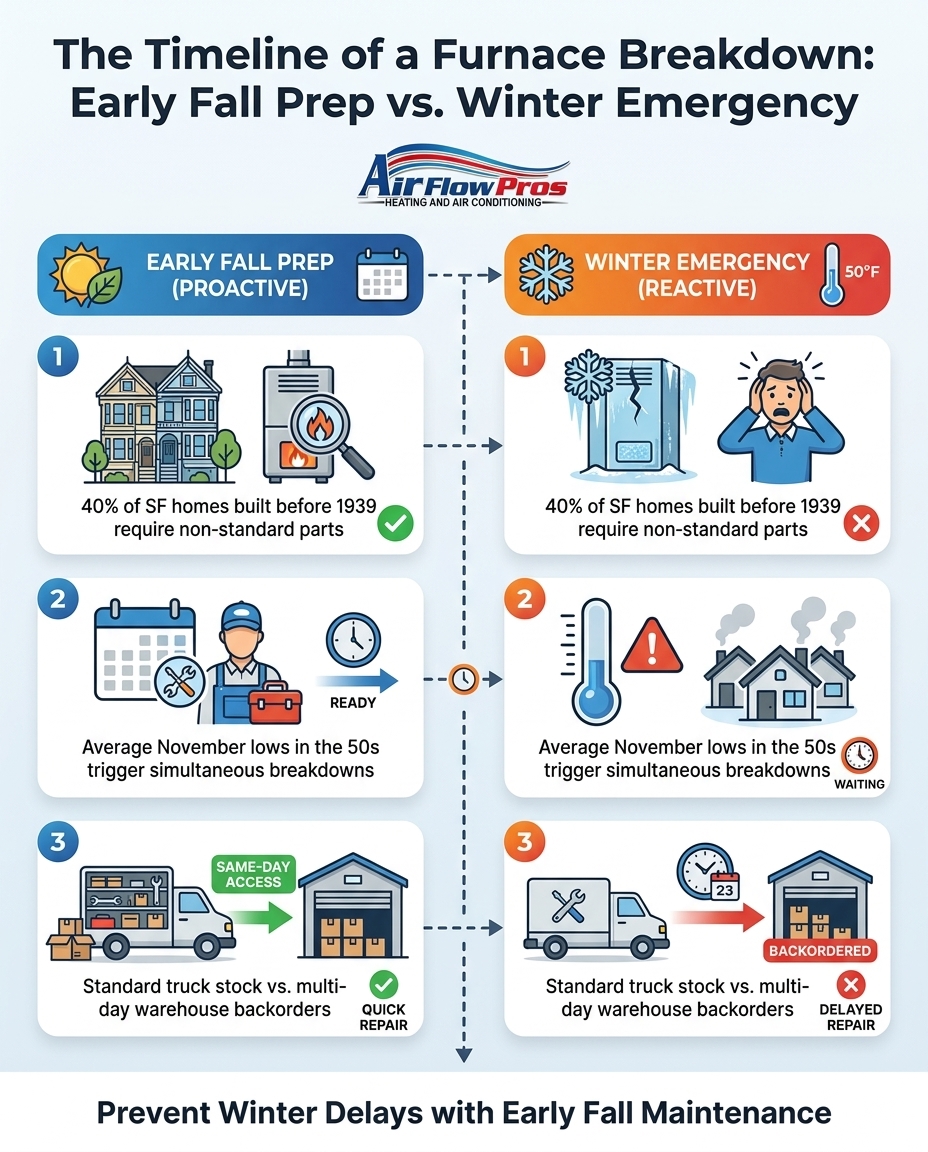
Waiting for a complete breakdown forces you into a frantic, city-wide queue for parts and service. When thousands of households turn on their heating systems for the first time in months, the sudden surge in demand overwhelms the local HVAC supply chain. This is not just a minor inconvenience; it means enduring freezing indoor temperatures while waiting for backordered components to ship across the country.
• Instant inventory depletion: Local warehouses stock a finite number of replacement components based on average historical demand. A sudden November cold spell drains this inventory in a matter of hours.
• Extended shipping times: Once local stock is gone, suppliers must order from regional or national distribution centers, adding days to the repair timeline.
• Service schedule bottlenecks: Technicians are stretched thin responding to emergency calls, meaning even if a part is available, scheduling the installation takes longer.
• Compounding system damage: Running a struggling furnace with a failing part often damages adjacent components, turning a simple repair into a complex overhaul.
The strategic advantage of addressing potential failures during your September fall-prep vs November cold spell emergencies cannot be overstated. Early diagnostics provide a seamless transition into reliable winter comfort. By having our professionals inspect the system before the weather turns, we identify worn belts, failing ignitors, or weak motors while replacement inventory is still sitting fully stocked on local warehouse shelves.
Why Older San Francisco Historic Homes Face Unique Heating Challenges
The architectural charm of the Bay Area comes with specific mechanical realities. In our years of keeping local neighborhoods warm, our team has seen firsthand that over 40% of the city's housing units were built before 1939. These older San Francisco historic homes often house legacy heating setups, such as older wall heaters or gravity furnaces, which require highly specialized maintenance and non-standard components.
The core problem is that these aging systems do not use modern, universal parts. When a mid-century heating unit breaks down, our technicians cannot simply pull a generic replacement off their service van. The proprietary components required for these legacy units are no longer mass-produced at the same volume as modern equipment, making them highly susceptible to supply chain delays.
Because these niche parts cannot be sourced same-day from standard suppliers, a failure often results in a prolonged wait. We frequently have to track down specialized manufacturers or salvage distributors, verify compatibility with obsolete schematics, and wait for standard freight shipping. This process is drastically different from servicing a modern system, where parts are readily available at any local supply house.
At a certain point, it becomes more practical to consider modernizing the system rather than waiting weeks for obsolete parts. Upgrading to modern gas furnace replacements eliminates the stress of hunting down rare components, offering immediate access to universal parts and significantly better energy efficiency.
The Reality of Legacy Heating Setups
Identifying the common older furnace types found in Bay Area historic homes helps explain the supply chain bottleneck. Many properties still rely on floor furnaces, heavy cast-iron radiators, or early-generation forced-air systems. The manufacturing decline of niche parts for these mid-century heating units means that every year, the pool of available replacement parts shrinks.
• Gas Valves — Modern Furnaces (Post-2010): Universal, stocked on most service vans — Legacy Systems (Pre-1980): Proprietary threading, often requires special order
• Blower Motors — Modern Furnaces (Post-2010): Standard ECM or PSC motors, widely available — Legacy Systems (Pre-1980): Unique mounting brackets, custom sizing required
• Control Boards — Modern Furnaces (Post-2010): Readily available at local supply houses — Legacy Systems (Pre-1980): Obsolete circuits, often requires retrofitting
• Ignition Systems — Modern Furnaces (Post-2010): Standard hot surface ignitors — Legacy Systems (Pre-1980): Standing pilots or rare spark modules
This table highlights exactly why maintaining an older system requires proactive planning. Waiting until a component completely shatters guarantees a delay, whereas allowing us to identify a struggling motor during a routine fall inspection gives our team the lead time necessary to source the rare part without you losing heat.
The November Marine Layer: A Catalyst for City-Wide Furnace Failures
The unique geography of the Bay Area creates a specific weather phenomenon that acts as a catalyst for sudden heating failures. Average November low temperatures in San Francisco drop into the low 50s. While that might not sound extreme compared to East Coast winters, it feels drastically colder indoors due to the physical impact of high coastal humidity and poor historic insulation.
The damp chill effect: The biting, damp marine layer makes 50 degrees feel freezing inside poorly insulated historic homes. Moisture in the air conducts heat away from the body much faster than dry air. When this heavy, damp fog rolls in and settles over the city, it penetrates the lath and plaster walls of older Victorian and Edwardian homes, stripping away any retained indoor warmth.
Simultaneous equipment strain: This sudden, damp temperature drop causes simultaneous equipment strain across thousands of households. Homeowners who haven't run their heat since early spring suddenly push their thermostats up to combat the biting indoor chill. Furnaces that have been sitting dormant, collecting dust and developing minor mechanical stiffness, are suddenly forced to run continuously.
The localized panic rush: This exact weather pattern creates a localized panic rush that depletes local HVAC supply houses all at once. It is a predictable cycle our dispatchers see every year: the marine layer hits, thousands of older systems struggle to ignite or blow warm air, and our dispatch boards light up across the city. The contrast between a calm September fall-prep vs November cold spell chaos is stark. By the time you realize your system is blowing cold air, hundreds of your neighbors have already claimed the available replacement parts.
Understanding the Local HVAC Supply Chain Bottleneck
To truly grasp why delays happen, you have to understand the logistical mechanics behind HVAC repairs during peak season. The supply chain is not a single entity; it is a tiered system of service vans, local distribution warehouses, and national manufacturing hubs.
Truck Stock vs. Warehouse Inventory
There is a massive logistical difference between standard technician truck stock and specialized supply house orders. What our technicians carry daily is carefully curated based on the most common, universal repairs for modern equipment. A standard service van carries universal capacitors, standard ignitors, common contactors, and generic thermostats.
However, there are strict physical space limitations on a service van. A technician cannot carry the specific, proprietary blower motor for an 80-year-old furnace, nor can they carry the rare gas valve required for a discontinued floor heater. When an Air Flow Pros technician diagnoses a failure on an older San Francisco historic home, they must leave the property to source the part from a local supply house.
The Impact of Peak Winter Demand
During the November rush, local Bay Area supply houses experience a massive spike in counter traffic. If the local warehouse does not have the specific legacy part in stock, they must order it from a regional hub or directly from the manufacturer out of state. Global supply chain shortages continue to compound with this local Bay Area winter demand, extending lead times for niche components.
The Ripple Effect of Out-of-State Shipping
The ripple effect of emergency repair wait times becomes severe when specific legacy parts must be shipped from out of state. Standard freight takes several days, and severe winter weather in the Midwest or East Coast can delay those shipments further. This leaves Bay Area homeowners waiting in a holding pattern while their house remains freezing.
Why Expediting is Often Impossible
A common misconception we hear is that paying extra can bypass the wait. Unfortunately, expediting parts during a regional cold snap is often impossible regardless of budget. If a specialized motor is sitting in a warehouse in Ohio, overnight shipping might be an option, but if the part is entirely backordered and waiting on a manufacturing run, no amount of expedited shipping will make it arrive faster.
How Early Diagnostics Bypass the Backorder Queue
The most effective way to handle the local supply chain bottleneck is to avoid it entirely. The strategic timing of acting before the local supply houses experience peak backorders is your best defense against freezing indoor temperatures. A proactive approach shifts the timeline in your favor.
At Air Flow Pros Heating And Air Conditioning, our deep local expertise in diagnosing older SF systems early allows you to order legacy parts ahead of the November rush. We know exactly what components tend to fail in the city's unique historic housing stock, and we know how to spot the early warning signs before a complete breakdown occurs.
1. Comprehensive System Evaluation: Our technicians inspect the entire heating ecosystem during the mild weather of September or October. This involves testing voltage drops, inspecting heat exchangers, and listening for abnormal bearing noises in the blower motor.
2. Identifying Failing Proprietary Parts: The goal is to catch components that are operating out of tolerance before they break completely and leave a home without heat. A motor drawing too many amps is a clear sign it will fail soon under heavy winter loads.
3. Strategic Parts Ordering: By identifying the failing component early, we can order the necessary parts while warehouses are still fully stocked and shipping lanes are clear. You bypass the emergency queue entirely.
4. Scheduled Replacement: The part arrives, and our technician installs it on a planned schedule, securing a warm, functional home before the first major drop in temperature.
Enrolling in a proactive maintenance plan ensures this diagnostic process happens automatically every year. It takes the guesswork out of seasonal preparation and guarantees your older system is evaluated long before the September fall-prep vs November cold spell dynamic becomes an emergency.
Maximizing Airflow and Efficiency Before Winter
Replacing a failing part is only one step in ensuring an older furnace operates safely and reliably. The overall health of the heating ecosystem plays a massive role in how well your home retains warmth, especially in older San Francisco historic homes with unique architectural layouts.
Proper airflow distribution: Historic homes often feature long, complex duct runs that navigate around original framing and lath walls. If these ducts are restricted, crushed, or leaking, the furnace has to work twice as hard to push warm air into the living spaces. This extra strain drastically reduces the lifespan of newly installed legacy parts. A brand-new blower motor will burn out prematurely if it is constantly pushing against high static pressure caused by poor airflow.
Addressing ventilation and duct health: Maximizing the efficiency of an older system requires addressing the delivery method. Sealing leaks, ensuring vents are unobstructed, and verifying that return air pathways are clear all contribute to a healthier system. This preparation readies the entire heating ecosystem for sustained winter loads, ensuring that when the marine layer hits, the warm air actually reaches the rooms you live in.
Sustained winter performance: A holistic approach to system health prevents secondary failures. For more details on how air distribution impacts your comfort, exploring the mechanics of optimizing HVAC ductwork performance provides valuable insight into getting the most out of your historic heating system.
Frequently Asked Questions About Furnace Parts and Repairs in SF
How long does it take to get a furnace part in San Francisco?
In our experience serving the Bay Area, getting a furnace part in San Francisco typically takes anywhere from a few hours to over a week, depending entirely on the age of your system and the time of year. Standard parts for modern furnaces are usually available same-day from local supply houses. However, if you own an older historic home requiring proprietary components during a peak November cold spell, you should expect a multi-day wait as parts are shipped from out-of-state distributors.
Why do furnace parts take so long to order during the winter?
Furnace parts take longer to order during the winter because sudden temperature drops cause simultaneous equipment failures city-wide, rapidly depleting local warehouse inventory. Once local stock is exhausted, HVAC companies like ours must order from regional or national hubs. This sudden surge in demand, combined with standard freight shipping times and winter weather delays across the country, creates a significant supply chain bottleneck.
Are furnace parts hard to get right now for older historic homes?
Yes, parts for older historic homes are consistently harder to source because legacy systems like gravity furnaces or older wall units rely on obsolete, non-universal components. Manufacturers no longer produce these parts in high volumes, meaning local supply houses rarely keep them in stock. Our technicians often have to track down specialized salvage distributors or custom manufacturers to find the correct fit.
What happens during a fall furnace tune-up in an older property?
During a fall furnace tune-up in an older property, an Air Flow Pros technician thoroughly inspects the heat exchanger for cracks, tests the ignition system, and measures the electrical draw of aging motors. The primary goal is to identify proprietary parts that are beginning to fail so they can be ordered in September. This proactive approach ensures the system operates safely and prevents a complete breakdown during peak winter demand.
Can I expedite HVAC replacement parts during a cold snap?
Expediting HVAC parts during a cold snap is often impossible, even if you are willing to pay extra for shipping. If a specific legacy part is completely backordered at the national level due to high seasonal demand, it simply does not exist on a shelf to be shipped overnight. The only reliable way to bypass this delay is to diagnose failing parts during the early fall before the regional rush begins.
How can I stay warm while waiting for a delayed furnace repair?
While waiting for a delayed furnace repair, you can maintain indoor comfort by utilizing safe, localized heating methods like electric space heaters in primary living areas. Ensure all windows are properly weather-stripped to block the damp marine layer, and keep interior doors closed to trap heat in occupied rooms. Never use ovens, stovetops, or outdoor equipment like camp stoves to heat your home, as these pose severe fire and carbon monoxide risks.
Secure Your Comfort Before the Cold Spells Hit
Understanding why sourcing furnace parts in San Francisco takes longer during November cold spells is the first step in protecting your home from unexpected winter breakdowns. The reality of the local supply chain, especially for older historic properties, means that waiting for a failure guarantees a freezing, frustrating delay. The peace of mind gained from early preparation and proactive parts sourcing transforms a potential emergency into a minor, scheduled maintenance visit.
The ultimate goal is to avoid days of freezing indoor temperatures when the damp marine layer settles over the city. A September fall-prep vs November cold spell strategy ensures your family remains comfortable regardless of supply chain bottlenecks. Take control of your winter comfort today—reach out to our local experts at Air Flow Pros Heating And Air Conditioning and schedule a comprehensive inspection of your historic heating system before the seasonal rush begins.
Service Areas

