


The Hidden Cost of Ignoring Strange AC Noises Before a Major Breakdown

When a Strange AC Noise Signals an Impending Breakdown
You hear a distinct rattling or clanking coming from your AC unit, but the air blowing out of the vents is still cold. The hidden cost of ignoring strange AC noises before a major breakdown is that what seems like a minor annoyance is actually an active mechanical failure happening in real time. Many homeowners assume that as long as the house feels comfortable, a new sound is just a quirk of an aging machine. The reality is far more dangerous for your equipment. A rattling sound is often the very first warning sign that a critical component has broken loose inside the chassis.
At Air Flow Pros Heating & Air Conditioning, our team often sees homeowners navigating this exact scenario. Finding professional troubleshooting air conditioner issues is the safest next step. The decision you make in the first few hours of hearing that noise dictates whether you pay for a minor adjustment or a total system replacement.
The unique challenge of local architecture: In our years of servicing the Bay Area, we've found this vulnerability is especially pronounced in older San Francisco homes with retrofitted HVAC. These historic properties were rarely built with central air conditioning in mind. When modern cooling systems are retrofitted into these spaces, the installations are often tight. Equipment might be mounted in narrow crawlspaces, modified attic spaces, or on custom brackets along exterior walls. Because these installations leave very little room for error, the systems are highly sensitive to structural vibrations.
The critical decision point: If a motor mount loosens or a blower wheel becomes slightly unbalanced in one of these tight retrofitted setups, the resulting vibration has nowhere to go. It transfers directly into the unit's frame and the delicate copper lines connected to it. You face a stark choice: shut the unit off immediately to allow a technician to tighten a few bolts, or keep running it for comfort until the vibration literally shakes the system apart. Ignoring these early warning signs is a direct path to catastrophic compressor failure.
Why Sporadic Usage Makes AC Noises More Dangerous
The Problem: Cooling systems that sit idle for months are incredibly prone to acute mechanical failures rather than gradual wear and tear. In many parts of the country, air conditioners run for eight months straight, slowly wearing out belts and bearings over time. In our region, our technicians see usage patterns that are entirely different. An AC unit might sit completely dormant from November through June, only to be suddenly blasted at full capacity when July's peak summer heat places maximum load on the system.
The Cause: During those long periods of inactivity, mounting bolts can contract and expand with ambient temperature changes. Rubber isolation pads dry out and shrink. When the system finally kicks on and runs continuously under peak cooling demands, those slightly loosened components are suddenly subjected to intense rotational force. Because older San Francisco homes with retrofitted HVAC often have less tolerance for loose mounts or unbalanced blower wheels, the system cannot absorb this sudden shock. The equipment begins to rattle aggressively against its constraints.
The Solution: You must treat a new noise as an active mechanical emergency, not a nuisance. It is the sound of metal hitting metal. When a blower fan spins at high RPMs with a loose bracket, it is actively chewing through its own housing. Recognizing that sporadic usage breeds acute failures allows you to act quickly. Shutting the system down at the thermostat prevents that initial rattle from escalating into a system-destroying event.
The Chain Reaction: From a Simple Rattle to Compressor Failure
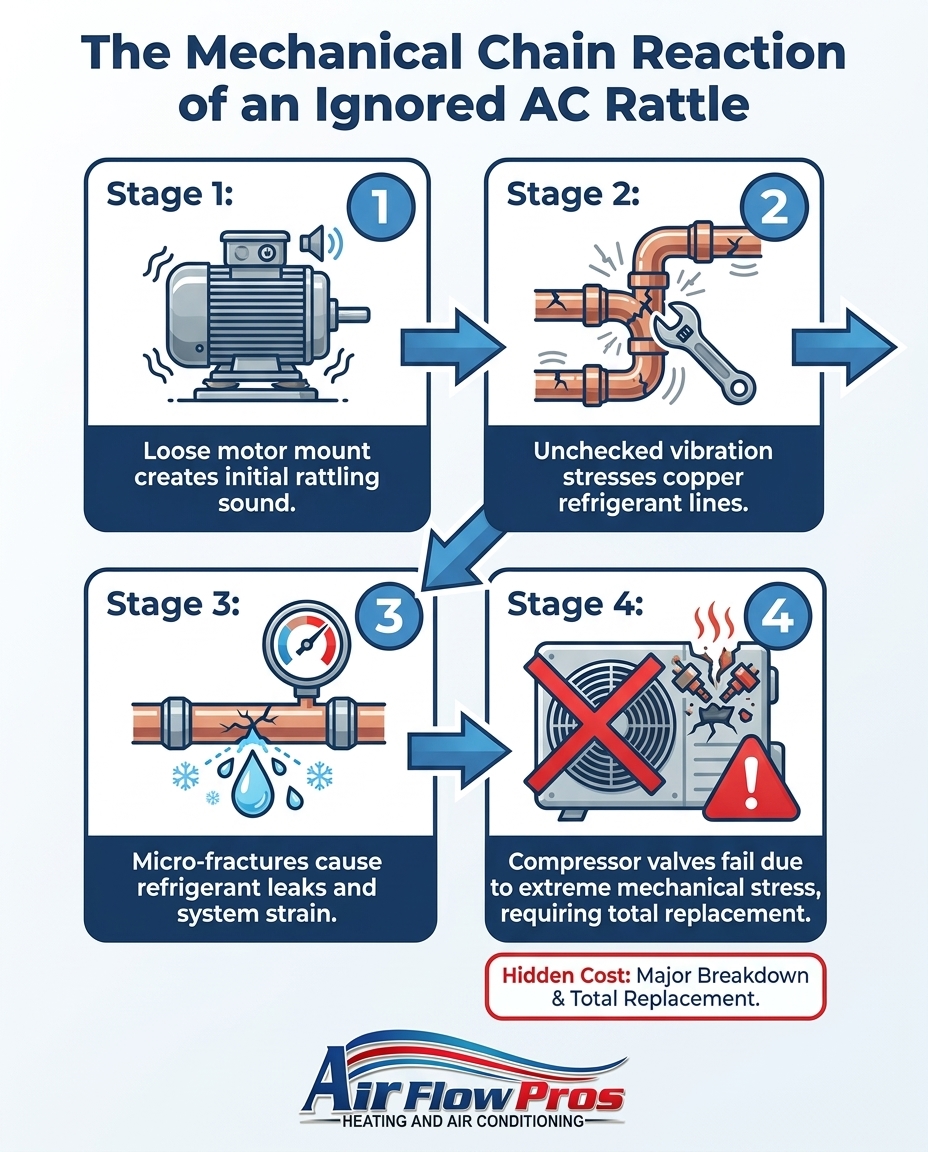
Understanding the physics of an HVAC failure helps explain why a simple noise is so destructive. A rattling air conditioner does not just stay a rattling air conditioner. It triggers a predictable, step-by-step mechanical chain reaction that ultimately destroys the most expensive component in your entire system: the compressor.
One San Francisco homeowner reached out during a peak summer heatwave when they noticed a severe rattling sound coming from their unit. Jose helped diagnose the mechanical severity of the problem over the phone, realizing it was a severe imbalance rather than a minor hum, and came out to see it within two hours. Quick action stopped the following chain reaction in its tracks.
Stage 1: The Initial Imbalance
1. A single bolt loosens: The process begins innocently enough. A motor mount bolt backs out by a fraction of an inch, or a small weight falls off the blower wheel.
2. The system continues to cool: Because the electrical components and refrigerant levels are still fine, the AC keeps blowing cold air. This masks the severity of the issue, tricking homeowners into thinking everything is functionally normal.
Stage 2: Structural Vibration and Line Stress
1. Heavy vibration begins: The initial rattle turns into a heavy, rhythmic vibration. The entire chassis of the air conditioner begins to shake.
2. Copper lines take the strain: The copper refrigerant lines connected to the compressor are rigid. As the unit shakes, these delicate lines bear the brunt of the mechanical stress.
Stage 3: Micro-Fractures and Refrigerant Loss
1. Fractures form: Continuous operation under heavy vibration causes micro-fractures to form at the joints and welds of the copper lines.
2. The system bleeds out: Refrigerant begins to leak from these microscopic cracks. As the refrigerant level drops, the system has to work twice as hard to cool your home, running longer cycles during the summer heat and generating even more vibration.
Stage 4: Total Compressor Death
1. Oil starvation and overheating: Refrigerant carries the lubricating oil for the compressor. As refrigerant leaks out, the compressor loses its lubrication and begins to overheat.
2. Mechanical seizure: Pushed beyond its limits—often during sudden July San Francisco heatwaves when cooling performance is tested most—the compressor valves shatter or the internal motor seizes completely. The system is dead, and early diagnosis could have prevented all of it.
The Behavioral Trap of Ignoring Noises During Mild Weather
The psychology of delay: It is human nature to avoid dealing with problems that do not seem urgent. Homeowners often assume that if the AC is blowing cold air, the noise is just a cosmetic flaw that can wait until later. This behavioral trap is the number one reason our team sees minor repairs turn into massive replacements. When the weather outside is manageable, the urgency to call a technician drops to zero.
The danger of foggy days: Delaying action during mild or foggy summer mornings leaves the system heavily compromised. You might run the AC for just an hour to clear out some humidity, hear the rattle, and turn it off, thinking no real harm was done. But every minute that unbalanced system runs, the micro-fractures in the copper lines grow larger. The system is slowly bleeding out its refrigerant, losing its internal lubrication, and weakening its structural integrity while you wait.
The heatwave breaking point: The trap snaps shut when the weather shifts. Contrast those mild, foggy days where noises are ignored with the extreme strain placed on the system during sudden mid-summer heat spikes. When intense July San Francisco heatwaves hit, that compromised system is suddenly asked to run for ten hours straight. The weakened lines finally snap, all the refrigerant vents out, and the unlubricated compressor grinds itself to death trying to keep up with the thermostat.
Breaking the cycle: We always recommend establishing a baseline of care before the noise even starts. Enrolling in a routine AC maintenance plan breaks this cycle of procrastination. A technician checks the tightness of every mount and the balance of every wheel long before they have a chance to rattle, keeping your system safe from sudden heatwave failures.
Minor Adjustments Versus Total System Replacement
To truly understand the hidden cost of ignoring these mechanical warnings, you have to look at the massive difference in scope between fixing a rattle today versus fixing a dead compressor next month. As local HVAC professionals, we know that a minor diagnostic visit to tighten a motor mount or balance a fan is a quick, routine procedure. A destroyed compressor is a catastrophic failure that often forces your hand into buying an entirely new unit.
Particularly in older San Francisco homes with retrofitted HVAC, replacing a system is never a simple swap. It requires navigating tight access points, modifying custom brackets, and carefully routing new lines through historic building materials. The hidden cost of ignoring the noise is the difference between a simple afternoon tune-up and spending days without cooling while a major construction project takes place in your home.
• Time Required — Proactive Diagnostic (Fixing the Rattle): Usually completed in a single short visit. — Reactive Emergency (Fixing the Dead System): Can take days to source equipment and install.
• Mechanical Impact — Proactive Diagnostic (Fixing the Rattle): Preserves the lifespan of the existing equipment. — Reactive Emergency (Fixing the Dead System): Requires tearing out and replacing major components.
• Comfort Impact — Proactive Diagnostic (Fixing the Rattle): Zero downtime; system is secured and runs quietly. — Reactive Emergency (Fixing the Dead System): Total loss of cooling during peak heatwaves.
• Property Impact — Proactive Diagnostic (Fixing the Rattle): Non-invasive bracket tightening. — Reactive Emergency (Fixing the Dead System): Heavy disruption, especially in retrofitted homes.
Prompt action preserves the lifespan of the existing equipment. By addressing the mechanical imbalance while it is still just a noise, you keep the original, factory-sealed refrigerant circuit intact. Once that circuit is breached by vibration damage, the health of the system is permanently compromised.
Making the Call: When to Shut Down Your AC Immediately
Knowing exactly when to kill the power to your air conditioner can save your compressor. Not every sound requires an emergency shutdown, but certain noises indicate that the system is actively destroying itself. If you are unsure, our team advises that you err on the side of caution.
During a very hot summer day, another local homeowner's heat pump system would not turn on after a period of severe rattling. Rudy provided a same-day repair, replacing a damaged mount and ensuring the system continued to run well. Because the homeowner recognized the severity of the situation and stopped running the compromised system, a total replacement was avoided.
• Listen for metal-on-metal screeching: This usually indicates a fan blade is physically striking the metal housing, or bearings have completely failed. Shut the system off at the thermostat immediately.
• Watch out for violent rattling or banging: A heavy, rhythmic banging means a major component, like the compressor itself, has broken loose from its mounting bolts.
• Never run it "just to get through the day": Every minute of operation compounds the mechanical damage. Do not force a rattling system to run just because sudden peak-summer San Francisco heatwaves are making the house uncomfortable.
• Check for secondary issues: Notice whether the noise is isolated to the outdoor unit or echoing through the vents inside. Noises echoing inside often point to blower motor issues, which can be mitigated by optimizing HVAC ductwork performance and securing loose internal brackets.
• Call for a professional evaluation: Keep the power off until a qualified technician can inspect the fan blades, motor mounts, and compressor constraints. Restoring power before the issue is resolved will only accelerate the damage.
Protecting Your Equipment with Proactive Diagnostics
The value of honest assessments: The goal of a service call should always be to save your current system, not just sell you a new one. When you hear a strange noise, you need a technician who acts as an investigator, tracing the vibration back to its exact origin. Expert technicians focus on finding the root cause of the noise—like a single loose motor mount or a slightly warped fan blade—before it causes irreversible damage to the copper lines.
Navigating complex installations: This level of precision is vital for local properties. Particularly in older San Francisco homes with retrofitted HVAC, precise, honest diagnostics are essential for long-term reliability. A technician must understand how the unique mounting brackets and tight clearances interact with the equipment's natural vibrations. They have to look beyond the obvious symptoms to ensure the entire retrofitted structure is secure.
A commitment to your home: At Air Flow Pros Heating & Air Conditioning, we are committed to proactive diagnostics and honest assessments to save homeowners from the stress of sudden emergency replacements. By treating every rattle and clank as a solvable mechanical puzzle, our HVAC experts in San Francisco help you maximize the lifespan of your cooling equipment, keeping your home comfortable without unnecessary massive overhauls.
Take Action Before a Minor Rattle Becomes a Major Replacement
Strange AC noises are mechanical warnings, not just annoyances. When your system speaks to you through clanks, bangs, and rattles, it is telling you that something has broken loose and is actively threatening the heart of the machine. Catching a loose component early prevents catastrophic compressor failure, especially when your system is pushed to the limit during sudden mid-summer San Francisco heatwaves.
Do not fall into the behavioral trap of ignoring a noise just because the air is still cold. The longer you wait, the more expensive the hidden mechanical damage becomes. Prioritize professional diagnostics at the very first sign of a strange sound. If you are hearing something unusual from your unit, schedule comprehensive air conditioning services with our team today to secure your system and protect your investment for years to come.
Frequently Asked Questions
Is it safe to run my AC if it's making a noise?
The short answer is no, it is rarely safe to keep running a noisy AC unit. A new, distinct noise usually indicates a mechanical failure, such as a loose part or failing bearing. Running the system forces that compromised part to keep working, which often leads to severe secondary damage, like fractured refrigerant lines or a blown compressor. Shutting the system off immediately is the best way to protect your equipment.
Why is my AC making a loud rattling noise?
A loud rattling noise typically means a component has broken loose from its mounting. The most common culprits are loose blower wheels, detached motor mounts, or unfastened panels vibrating against the chassis. Because the system operates at high speeds, even a slightly loose bolt can cause a violent rattle that shakes the entire unit.
Can a rattling AC cause a fire?
While rare, a severe mechanical failure can create a fire hazard if left completely unchecked. If a rattling blower motor eventually seizes up, it can draw excessive electrical current, causing wires to overheat and potentially melt their insulation. Additionally, severe vibration can chafe electrical wires against the metal casing, leading to dangerous electrical shorts.
How do I know if my AC compressor is going bad?
At Air Flow Pros, one pattern we see often is that a failing compressor will announce itself with hard starts, loud banging, or heavy screeching noises. You might also notice that the system is blowing warm air, tripping the circuit breaker repeatedly, or vibrating so violently that the entire outdoor cabinet shakes. If you notice these symptoms, turn the unit off immediately to avoid further electrical or mechanical damage.
What happens if you ignore a loose AC motor mount?
Ignoring a loose motor mount allows the motor to shift out of alignment while spinning at high speeds. This creates a severe structural vibration that travels through the entire air conditioner. Over time, this vibration fractures the delicate copper refrigerant lines, causing the system to leak refrigerant and eventually destroying the compressor due to overheating and lack of lubrication.
How long does it take for a loose blower fan to damage an AC unit?
Damage from a loose blower fan can happen incredibly fast, sometimes within just a few hours of continuous operation. The fan spins at hundreds of revolutions per minute, meaning an imbalance acts like a hammer repeatedly striking the inside of the unit. If the fan blade hits the metal housing or the vibration snaps a copper line, the system can suffer catastrophic failure in a single afternoon.
Service Areas

