


Furnace Repair in Oakland, CA

Furnace Repair in Oakland, CA
When your furnace fails in Oakland, CA, you need fast, reliable information and clear options. Oakland homes experience mild but sometimes damp winters, chilly nights from the marine layer, and cold snaps, making a functioning heating system essential. Air Flow Pros provides expert furnace repair in Oakland, CA, giving you insights into common furnace failure diagnoses, straightforward troubleshooting you can try safely, what to expect during an on-site repair, details on parts and labor considerations, emergency and after-hours availability, realistic repair timelines, and how to best weigh your repair versus replacement options.
Common furnace problems in Oakland homes
Oakland furnaces most often fail in ways that are predictable and diagnosable. Typical issues include:
- No heat or intermittent heat — often caused by thermostat issues, clogged air filters, failed ignition, or control board faults.
- Short cycling — furnace starts and stops frequently; usually caused by airflow restrictions, bad thermostats, or overheating due to a dirty heat exchanger.
- Strange noises — banging, rattling, or squealing can indicate loose components, an unbalanced blower motor, or bearings needing replacement.
- Failure to ignite or pilot problems — common in older gas furnaces with pilot assemblies or in modern furnaces where the electronic igniter or gas valve is failing.
- Weak airflow — often due to blocked ducts, failing blower motors, or clogged filters.
- Unusual smells — burning smells on first startup can be dust; rotten-egg or chemical smells indicate gas leaks or other hazards and require immediate attention.
- Carbon monoxide risk — cracked heat exchangers or improper venting create a safety hazard; any suspicion of CO exposure must be treated as an emergency.
Basic troubleshooting you can try safely
Before calling for service, try these low-risk checks. If anything looks unsafe or you suspect a gas leak, leave the home and call emergency services.
- Check the thermostat: confirm batteries, correct mode, and set temperature 3 to 5 degrees above room temp.
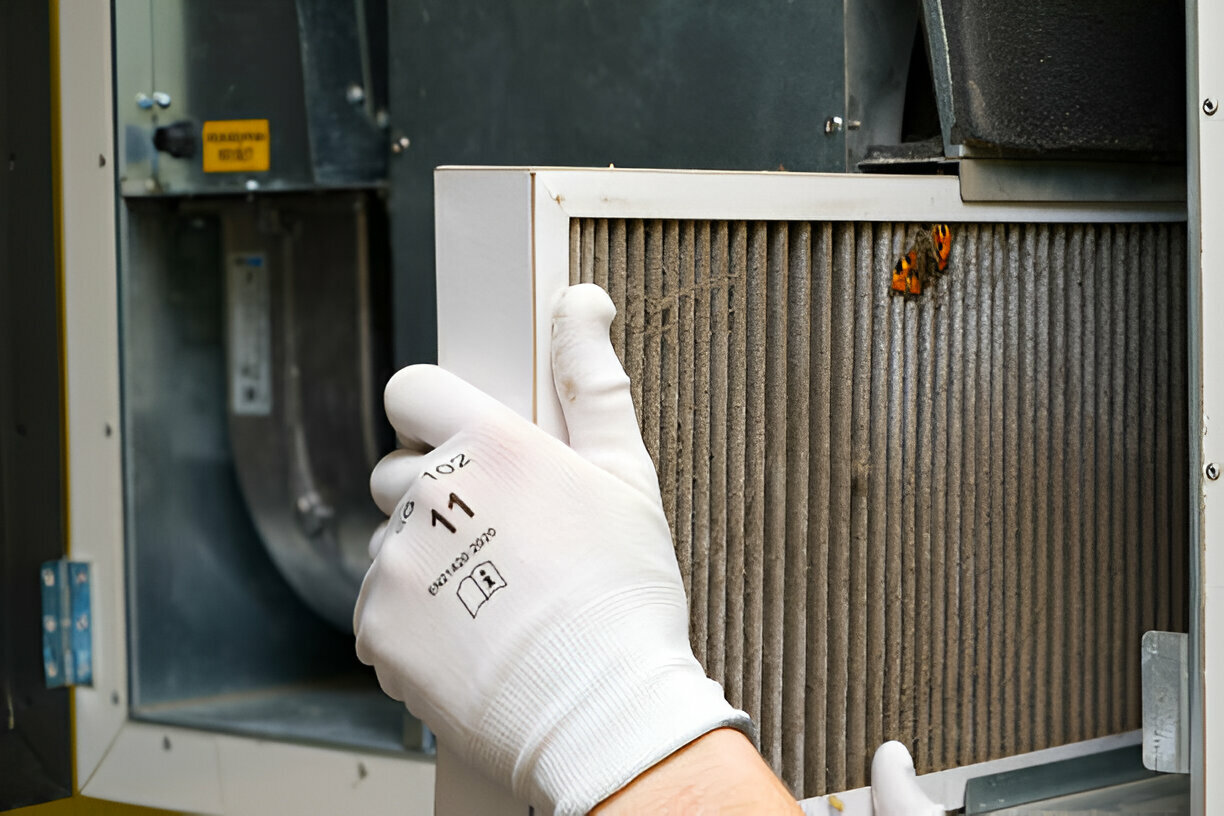
- Inspect and replace the air filter if dirty. Restricted filters cause many performance problems.
- Verify power: check breakers and any furnace switch near the unit.
- Look at the pilot or ignition: on older units, relight pilot following the label instructions. For modern systems, listen for ignition attempts.
- Check vents and returns: ensure supply registers and return grilles are open and unobstructed.
- Note error codes: many furnaces flash LED codes on the control board. Photograph the code for the technician.
On-site diagnostic and repair process
A professional furnace repair technician will follow a consistent process to diagnose and repair your unit safely and efficiently:
- Safety check: gas leak detection, carbon monoxide check, electrical safety, and proper venting inspection.
- System history and symptom review: confirm what you observed and any recent changes.
- Visual and component inspection: thermostat, blower motor, control board, burners, heat exchanger, ignition system, filters, and duct connections.
- Operational testing: run the furnace through a full cycle to observe behavior and capture error codes.
- Repair plan and estimate: technician explains the problem, parts required, and labor involved. Expect clear information on options and expected outcomes.
- On-site repair: most common repairs are completed the same visit if replacement parts are stocked. Work includes component replacement, cleaning burners or flame sensor, motor lubing or replacement, control board swaps, and airflow fixes.
- Final test and safety verification: confirm safe operation, proper combustion, and adequate airflow. Technicians also verify thermostat calibration and leave the system ready for normal use.
Parts, labor, and warranties
- Parts: Common replaceable parts include filters, igniters, flame sensors, limit switches, blower motors, gas valves, and control boards. Oakland-area technicians typically carry many of these in-service vans for same-day repairs.
- Labor: Labor varies by the complexity of the task, access to the unit, and local labor rates. Labor covers diagnostic time, removal and installation of parts, and post-repair testing.
- Warranties: Ask about parts and labor warranties. Many professionals provide limited warranties on parts and a short warranty on labor. OEM parts usually carry manufacturer warranties; aftermarket parts may have different terms.
- Safety-first decisions: If diagnosis reveals a cracked heat exchanger, technicians will recommend replacement rather than repair due to carbon monoxide risk. That recommendation prioritizes safety over short-term cost savings.
Emergency and after-hours service in Oakland
Oakland homeowners may need heating service outside normal business hours during cold snaps. Emergency service options typically include:
- 24-hour emergency response for unsafe conditions like gas leaks or suspected carbon monoxide.
- After-hours appointments for loss of heat during nights or weekends, often with a higher service fee for immediate dispatch.
- Triage advice over the phone to determine if the situation requires a technician right away or can wait until regular hours.
Expected repair timelines
- Simple fixes: thermostat resets, filter changes, or minor electrical resets can be resolved in under an hour.
- Common component replacements: igniters, flame sensors, and limit switches are generally same-day repairs if parts are available, taking 1 to 3 hours.
- Blower motor or control board replacement: plan for 2 to 4 hours if parts are in stock.
- Complex repairs or ordered parts: if a specific or obsolete part must be ordered, repairs can take 1 to 5 business days depending on availability.
- Safety-driven replacements: if the heat exchanger is compromised, replacement planning and installation usually takes several days to arrange and complete.
Repair versus replacement: decision factors for Oakland homes
Deciding whether to repair or replace depends on multiple factors:
- Age of the unit: furnaces older than 15 years are often better replaced, especially if efficiency is low and repairs are frequent.
- Repair cost relative to replacement: a common rule is if a single repair exceeds 50 percent of the cost of a new system and the furnace is over 10 years old, replacement is more cost effective.
- Frequency of recent repairs: repeated callouts indicate declining reliability and higher lifetime cost.
- Efficiency and fuel savings: modern high-efficiency furnaces have higher AFUE ratings that lower gas bills, which matters in an area with moderate heating needs but rising energy costs.
- Safety: cracked heat exchangers, severe corrosion, or major combustion problems should lead to replacement for occupant safety.
- Home considerations in Oakland: many local homes are older with constrained installation access. A replacement may offer improved zoning, quieter operation, and compatibility with smart thermostats or whole-house filtration helpful during wildfire smoke seasons.
Maintenance and local considerations
Regular maintenance extends furnace life and avoids emergency repairs. For Oakland homes:
- Schedule annual preseason inspections before the cold months.
- Replace filters every 1 to 3 months depending on occupancy and air quality.
- Consider adding or upgrading whole-house filtration if wildfire smoke or urban pollution affects indoor air quality.
- If your home has ducts in unconditioned crawlspaces or attics, sealing and insulating ducts improves performance during cool nights.
Repairing your furnace in Oakland means balancing safety, cost, and long-term value. Timely diagnosis and professional repair can restore comfort quickly, while informed replacement decisions protect your family and reduce energy waste over time.
Service Areas

