


AC Maintenance in Palo Alto, CA

AC Maintenance in Palo Alto, CA
Keeping your air conditioner serviced year-round is essential in Palo Alto, CA, where warm inland summers, occasional heat waves, and seasonal wildfire smoke create unique demands on home cooling systems. Regular AC maintenance protects comfort, indoor air quality, and equipment life while reducing the risk of mid-summer breakdowns and unexpectedly high energy bills. Air Flow Pros provides comprehensive AC maintenance programs tailored for Palo Alto homes, details what our technicians inspect and repair, highlights common local issues, and explains how service agreements and scheduling work to keep your system reliable.
Why seasonal AC maintenance matters in Palo Alto
Palo Alto homeowners rely on efficient cooling during long, sunny summers and increasingly frequent hot spells. At the same time, wildfire smoke events and higher pollen counts can clog filters and strain fans. Routine maintenance:
- Restores lost cooling capacity and improves energy efficiency
- Reduces the likelihood of emergency repairs during peak heat
- Keeps indoor air quality higher by maintaining filters and coils
- Extends equipment life and preserves manufacturer warranty eligibility
Common AC maintenance issues in Palo Alto homes
Local climate and building characteristics lead to recurring problems technicians see during tune-ups:
- Dirty filters and restricted airflow after wildfire smoke or seasonal pollen
- Clogged condensate drains that cause water backups and indoor humidity problems
- Accumulated debris on outdoor condenser coils from nearby trees and landscaped yards
- Refrigerant leaks or low refrigerant charge that reduce cooling capacity
- Worn capacitors, contactors, or motors causing hard starts or noisy operation
- Thermostats out of calibration or misconfigured smart thermostats
- Duct leaks and insulation issues in older or retrofitted homes, reducing system efficiency
What a comprehensive AC maintenance program includes
A full maintenance visit is more than a quick filter change. Most comprehensive programs cover a checklist of preventative tasks designed to identify small issues before they become failures:
Pre-season tune-up tasks (typical for spring and late summer)
- Visual inspection of the indoor and outdoor units for damage, corrosion, and debris
- Filter inspection and replacement per the recommended schedule
- Outdoor condenser coil cleaning and removal of leaves, grass, and scale
- Indoor evaporator coil inspection and cleaning if needed
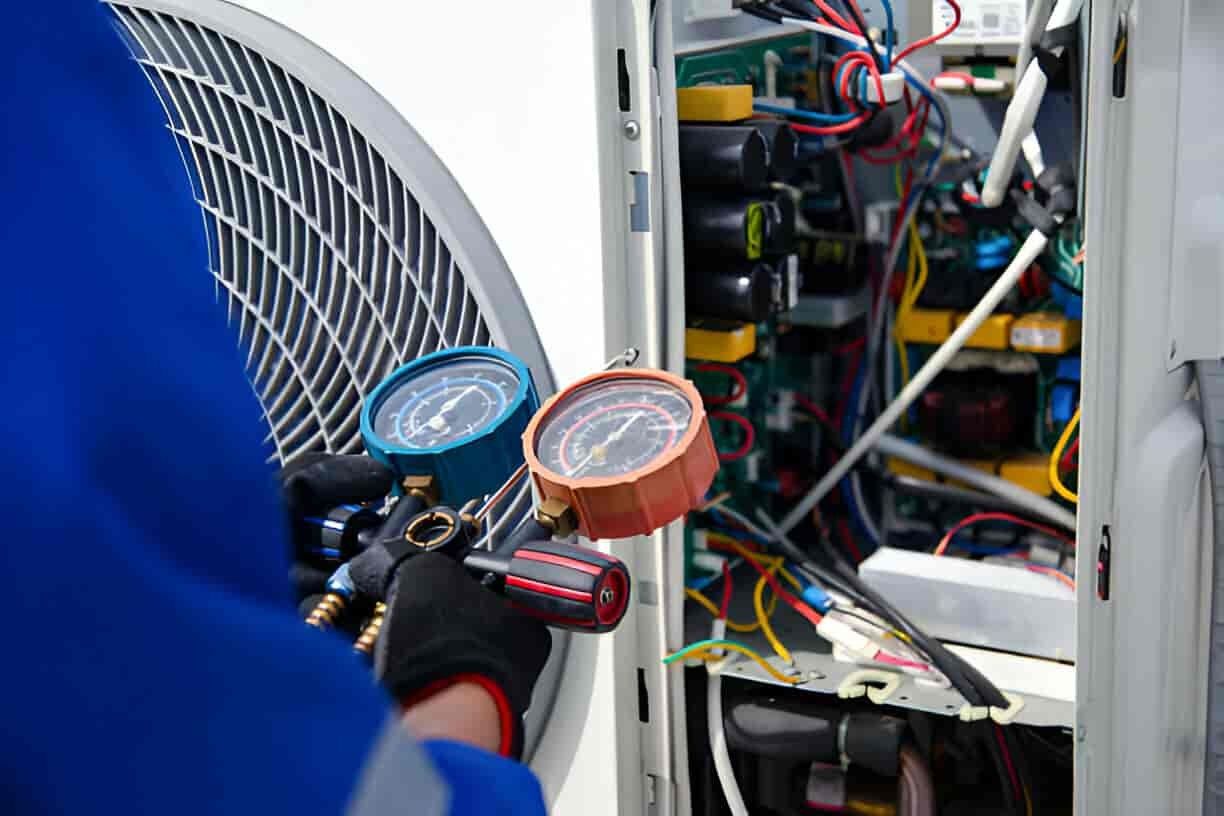
- Refrigerant pressure check and leak detection; verify system charge
- Airflow measurement and blower motor adjustment for correct CFM
- Electrical system check: capacitors, contactors, wiring, and safety controls
- Thermostat calibration and verification of temperature differentials
- Condensate drain and pan cleaning and verification of proper drainage
- Measured performance test: temperature split across evaporator (expected range), run-time, and noise/vibration assessment
- Documentation of findings and maintenance report with recommended repairs
Filter replacement schedules and IAQ considerations
- Standard filters usually need replacement every 1 to 3 months depending on use, occupancy, pets, and local air-quality events.
- During wildfire smoke seasons or prolonged construction nearby, more frequent filter changes and higher-efficiency whole-house filtration are often recommended to protect indoor air.
- We recommend selecting filters with the right MERV rating for your system: higher MERV for better filtration, but balanced against airflow requirements.
Diagnostic process explained simply
Technicians follow a step-by-step diagnostic process that’s transparent and easy to understand:
- Start with a thorough visual inspection to spot obvious wear or leaks.
- Verify power and safety controls to ensure the system is safe to operate.
- Measure airflow and the temperature drop across the evaporator coil to confirm cooling performance.
- Check refrigerant pressures and watch for evidence of leaks or an undercharged system.
- Test electrical components under load—capacitors, motors, and contactors are the most common failure points.
- Inspect and clean coils and condensate lines to prevent ice formation and drainage problems.
- Calibrate the thermostat and test smart control settings so the system cycles correctly and efficiently.
All observations are recorded and explained in plain language so you understand what was checked and why a recommended repair or adjustment matters.
Typical repairs and solutions addressed during maintenance
When problems are identified, technicians often perform one or more of the following:
- Replace clogged filters and advise on a replacement cadence for local conditions
- Clean or treat evaporator and condenser coils to restore heat-transfer efficiency
- Flush or clear condensate drains and install drain safety switches if needed
- Repair or replace capacitors, contactors, relays, and worn electrical components
- Tighten electrical connections and test for voltage and current irregularities
- Locate and repair refrigerant leaks; recharge system to correct working pressures
- Seal or recommend repair of duct leaks and insulation shortfalls affecting airflow
- Reprogram or recalibrate thermostats and align smart thermostat schedules to maximize savings
Service agreements and scheduling details for Palo Alto
Service agreements are the most effective way for homeowners to prevent downtime and maintain peak efficiency:
- Typical agreements include two seasonal tune-ups (pre-summer and pre-winter), priority scheduling during high-demand periods, and routine reminders for filter changes and inspections.
- Agreements often include discounted labor rates for covered repairs and a written maintenance report after each visit so you have a maintenance history for warranty or resale purposes.
- Scheduling is flexible to match local needs: a spring pre-summer tune-up is recommended in Palo Alto to prepare for sustained warm weather, while an early fall check helps the system transition for any heating needs.
How preventative maintenance benefits your home and wallet
Regular maintenance reduces unexpected failures, keeps cooling performance consistent, and improves energy use. For Palo Alto homes, that means:
- More reliable comfort during heat waves and fewer emergency service calls
- Better indoor air quality during smoke events and seasonal pollen spikes
- Smoother operation of newer, high-efficiency systems and smart thermostats
- Slower equipment wear and longer service life, protecting your HVAC investment
Practical maintenance tips for homeowners in Palo Alto
- Replace or inspect filters every 1 to 3 months; check more often during smoke events.
- Keep outdoor condenser units free from plants, mulch, and debris—leave at least 2 feet of clearance for airflow.
- Program smart thermostats for setback periods, but verify setbacks don’t cause excess run-time when re-cooling.
- Schedule pre-summer tune-ups to catch refrigerant or electrical issues before peak cooling demand.
- Consider upgrading to a higher-efficiency filter or whole-house filtration if smoke or allergies are a recurring problem.
Routine AC maintenance tailored for Palo Alto’s climate and air-quality challenges keeps systems efficient, safe, and ready when temperatures climb. A formal service agreement with seasonal tune-ups, documented inspections, and a clear filter replacement plan can eliminate surprises and help your cooling system perform reliably year after year.
Service Areas

